
Is Really Important for Artificial Plants UV Protection?
As an artificial plants Manufacturer, I get asked this question constantly: Is Artificial Plants UV protection really that important? The short answer is yes—absolutely. But the longer answer involves understanding how sunlight attacks different materials, how we engineer protection into products, and why skipping UV protection is a false economy that costs you more in the long run.
Have you ever placed a beautiful artificial plant near a sunny window, only to find it looking faded and brittle a few months later? The vibrant green leaves turn yellowish, the once‑rich red petals become pale pink, and the stems lose their flexibility. This is not a manufacturing defect—it is the sun doing what it does best: breaking down materials.
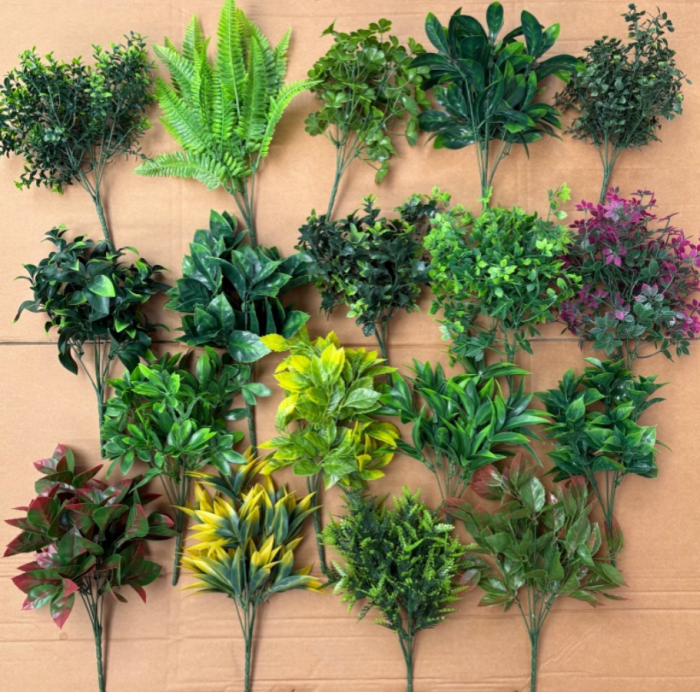
What Happens When UV Light Hits Your Artificial Plant?
Sunlight contains ultraviolet (UV) radiation—the same rays that give you a sunburn. When these rays hit the polymers and dyes used in artificial plants, they trigger a chemical reaction called photodegradation. In simple terms, the UV energy breaks the molecular bonds that hold the material together and give it colour.
There are three visible signs of UV damage:
- Fading – Colours lose their intensity. The realistic green of a Monstera leaf becomes a washed‑out yellow‑green. A once‑vibrant red rose turns salmon pink. This happens because the pigment molecules are destroyed by UV energy.
- Brittleness – Plastics become stiff and crack. A stem that was flexible now snaps when you bend it. Leaves develop tiny fractures along the leaf vein lines. The material literally falls apart.
- Chalking – A white, powdery residue appears on the surface. This is the degraded polymer breaking down into fine particles.
The speed of this damage depends on several factors: the intensity of sunlight, the type of material, and whether any UV protection is present. In direct sunlight, an unprotected artificial plant can show noticeable fading in as little as 2‑3 months. In less intense indoor light, the process is slower but still inevitable over a year or two.
Why Some Materials Are More Vulnerable?
Different materials react differently to UV. Polyethylene (PE), which is widely used for foliage, is moderately resistant but still degrades without stabilisers. Polyester (often called “silk”) is more sensitive—the fabric fibres break down and lose their lifelike drape. PVC can become brittle and discoloured. Foam and latex materials are particularly susceptible—they can crumble or become sticky.
This is why UV resistant is not just a marketing buzzword. It is an essential engineering specification that determines whether your artificial plant will look good for 5 years or 5 months.
How Make Artificial Plants UV Resistant?
Built‑in vs. Surface Protection
There are two main ways to protect artificial plants from UV damage, and the difference is critical.
Built‑in UV inhibitors are mixed into the raw plastic or fabric before the product is made. For example, when we produce PE leaves through injection molding, we add UV stabilisers to the polymer pellets. The stabilisers absorb or block UV radiation, preventing it from reaching the polymer chains. Because the protection is throughout the material, it lasts for the lifetime of the product—typically 5‑10 years outdoors.
Surface UV coatings are sprayed onto the finished product. These work like sunscreen for your plant. However, they are much less durable—rain, dust, and handling wear them off over time. A surface coating might last 1‑2 years, and it does not protect areas that are not fully covered.
From an engineering perspective, built‑in protection is always superior. It is more expensive upfront, but it saves you from replacing faded plants every season. When you see a product labelled UV resistant, always ask whether the protection is built into the material or just sprayed on.
Did you know that dark colours absorb more UV than light colours? A dark green leaf actually heats up more and can degrade faster if not properly stabilised. That is why high‑quality manufacturers use special UV‑stable pigments that reflect or block UV while still delivering the botanically accurate shades of nature.
We also use embossed textures—like raised leaf vein patterns—not just for realism but also to create microscopic shadows that reduce direct UV exposure on the surface. It is a clever engineering trick: the same embossed detail that makes the leaf look realistic also helps it last longer.
Why Artificial Plant UV Protection Matters for Other Performance Features?
You might wonder what UV has to do with flame retardant. Actually, a lot. Many flame retardant chemicals can be degraded by UV light, losing their effectiveness over time. So a plant that is flame retardant when new might lose that property if left in the sun without proper UV protection.
That is why in commercial settings—hotels, offices, public spaces—regulations often require both flame retardant and UV resistant certifications. Products with only one feature can become unsafe or unsightly. So I always recommend products that meet NFPA 701 (fire safety) and have proven UV stability. It is not just about looking good—it is about being safe for years.
When we talk about weatherproof artificial plants, most people think of rain or humidity. But sunlight is equally important. A weatherproof outdoor plant must resist not only moisture but also UV radiation, temperature swings, and wind. Without UV protection, even the most water‑resistant material will crack and fade, allowing water to penetrate and cause further damage.
True weatherproof products use UV‑stabilised polymers, rust‑proof wire cores, and coatings that withstand both sun and rain. They are tested in accelerated weathering chambers that simulate years of outdoor exposure in weeks. If a product claims to be weatherproof, check if it also says UV resistant—if not, it is only half‑truth.
Design and Structural Features That Work with Artificial Plant UV Protection
One of the most frustrating things about UV‑damaged plants is that the stems become stiff and snap. That is why we engineer bendable stem structures using internal steel or aluminium wires. The wire gives you the ability to shape the plant as you like—lean it, curve it, twist it—without breaking.
But here is the catch: if the outer plastic or fabric covering degrades from UV, the wire may become exposed, or the covering may crack, making the stem unsafe to handle. UV‑resistant materials keep the coating flexible and intact, so your bendable stem remains usable for many years. When I design a bendable stem, I always specify UV‑stabilised PVC or PE for the coating, ensuring the wire inside stays protected.
Shipping large artificial trees is expensive. That is why we use knock‑down structure—the tree comes in parts that you assemble at home. Branches are plug‑in or screw‑in, trunks are segmented with joiner tubes. This reduces box size and shipping costs.
But a knock‑down structure also means more joints and connection points. These areas are vulnerable to UV because they are often made of different materials (e.g., metal connectors, plastic sockets). Without proper UV protection, these joints can become brittle and fail, causing branches to fall out. By using UV‑stabilised plastics for all connector parts, we ensure the knock‑down structure remains secure for the product’s lifespan.
Similarly, lightweight is a desirable feature for easy handling and hanging. But lightweight foams and thin plastics are often more UV‑sensitive. We compensate by adding UV absorbers to the foam formulation or using a protective coating. So when you see a lightweight artificial plant that also claims UV resistance, know that the engineer has done extra work to balance weight and durability.
Many artificial plants are painted to achieve subtle colour gradients, dry‑brush highlights, or aged effects. Traditionally, solvent‑based paints were used, but they release volatile organic compounds (VOCs) that are harmful to workers and the environment.
Today, we use water‑based paint for most colouring steps. These paints are low‑VOC, safer to handle, and easier to clean up. But here is the challenge: water‑based paint can be less UV‑resistant than solvent‑based alternatives. The pigments may fade faster, and the binder may break down under sunlight.
That is why we formulate special water‑based paint with UV‑blocking additives. We also apply clear UV‑protective topcoats over the painted surface. This way, we get the environmental benefit of water‑based paints without sacrificing UV performance.
More customers are asking for products made from recycled materials. Using recycled plastics reduces waste and carbon footprint. However, recycled polymers often have degraded molecular chains, making them more susceptible to UV damage. Their colour stability is also less predictable.
To overcome this, we blend recycled materials with virgin polymers and add extra UV stabilisers. We also conduct rigorous testing to ensure that the final product meets our standards for realistic appearance and durability. It is a delicate balance—too much recycled content and the plant won’t last; too little and we miss the sustainability goal. The best products use a measured percentage of recycled materials (often 20‑30%) combined with high‑performance UV packages.
When children or pets are around, you want artificial plants that are non‑toxic. This means no heavy metals (like lead or cadmium) in pigments, no phthalates in soft plastics, and no harmful flame retardant chemicals (like brominated compounds).
The good news is that many modern UV stabilisers are also non‑toxic. We use hindered amine light stabilisers (HALS) and other additives that are considered safe. Similarly, our flame retardant systems are moving towards phosphorus‑based or mineral‑based options that are both effective and non‑toxic.
So when you see a label that says UV resistant, flame retardant, and non‑toxic, you are looking at a product that has been engineered to be safe for both people and the environment—while still looking beautiful for years.
Indoor vs. Outdoor – What Artificial Plant UV Protection Do You Need?
For indoor use, UV exposure is much lower because windows filter some UV (especially if they have low‑E coatings). Still, a plant placed right next to a south‑facing window receives significant UV over a year. I recommend UV‑resistant products even for indoors if the plant is within 3 feet of a window. For deeper rooms, standard (non‑UV) may suffice.
For outdoor use, UV resistance is mandatory. Look for products explicitly labelled for outdoor use with a stated UV warranty (e.g., “5‑year UV stability”). Check that the protection is built‑in, not just a surface coating. Also ensure the product is weatherproof—that covers rain, humidity, and temperature extremes.
A premium UV‑resistant artificial plant might cost 30‑50% more than a basic one. But consider this: the basic plant may need replacement every year, while the UV‑resistant one lasts 5‑10 years. Over a decade, you save money, avoid the hassle of repurchasing, and generate less waste. For commercial spaces, the labour cost of replacing faded plants multiple times a year is even higher. UV resistance is an investment, not an expense.
REQUEST QUOTE
Please fill out the form below and a representative will contact you. Thank you.
Sales Manager:Nina
Tel:
+86-19924394700
Email:
leafhometrade@gmail.com