
Why Offices Artificial Plants Are Perfect for Boosting Productivity?
Create a more peaceful and productive workspace with low-maintenance artificial plants. One day, I brought in a small artificial succulent for my desk. Nothing fancy—just a little green thing in a cement pot. Within a week, I noticed something strange. I felt calmer. More focused. Less stressed. My coworkers started commenting on how “nice” my desk looked.
That tiny succulent sparked a transformation. Soon, my desk had a small artificial pothos. Then a friend added a fiddle-leaf fig to the corner. Then someone brought in a trailing vine for the bookshelf. Within months, our office went from sterile to serene—and our productivity went up along with it.
Studies show that even virtual plants in office environments lead to higher cognitive performance and psychological well-being. Participants performed significantly better in short-term memory and creativity tasks when plants were present. Research found that plants in a windowless workplace corresponded to a 12% faster response time on computer tasks. After just an hour of work in a vegetated room, participants reported decreased perceived stress and fatigue, supported by measurable changes in blood pressure and heart rate.
Even if a plant is not real, our brains react positively to the green color and organic shapes. Studies have shown that even artificial plants produce certain positive effects on the psychological and physiological well-being of office workers. Research on virtual plants in office environments found positive effects similar to those of real plants, indicating the potential to complement or replace real plants within certain parameters. In other words, artificial plants can deliver many of the same benefits as live plants—without the maintenance headaches. Whether real or artificial, greenery makes us happier, calmer, and more productive. And artificial plants give you those benefits with zero maintenance.
The best part? You don’t need a green thumb to reap these benefits. Artificial plants give you all the visual and psychological advantages of greenery—without the watering, pruning, or plant-doctor visits.
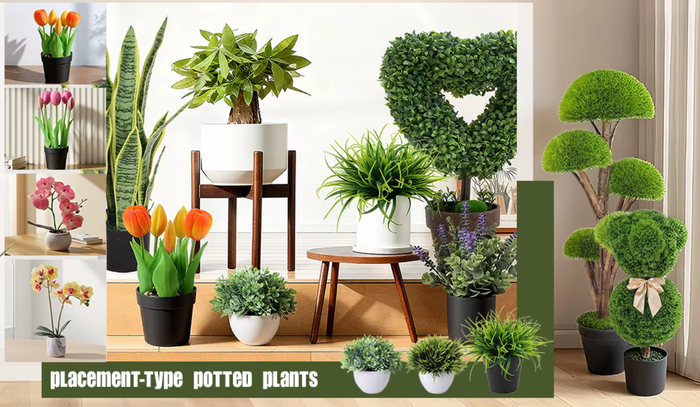
Why Artificial Plants Are Perfect for Offices?
Let’s be honest: offices are not ideal environments for living plants.
Low light: Most offices have fluorescent lighting and few windows. Plants that need sunlight slowly die.
Inconsistent care: People forget to water plants on weekends, during travel, or when they’re busy.
Mess near electronics: Soil, water spills, and fungus gnats are a disaster waiting to happen near computers.
No light in interior rooms: Cubicles, conference rooms, and windowless offices are plant graveyards.
Allergies and pests: Soil-borne allergies and gnats can disturb people in closed AC environments.
Artificial plants solve all these problems while still giving you the visual benefits of greenery:
No watering schedule: Weekends and travel won’t wreck your setup.
No mess near electronics: No spills, no soil, no fungus gnats.
No light requirements: Works in interior rooms, cubicles, and dim corners.
Always camera-ready: A simple plant instantly improves video-call backgrounds.
Consistency: Unlike real plants that might look yellow one day and dry the next, artificial ones stay in perfect condition despite heavy footfall or air conditioning.
Cost efficiency: While the upfront cost of a premium fake plant is higher, the long-term savings are massive—you don’t have to keep replacing dead plants every six months.
In an office, the goal isn’t “plant collecting.” It’s creating a space that feels calm, professional, and productive. Artificial plants deliver that with none of the hassle.
The Best Artificial Plants for Every Office Space
Small, high-detail plants are best for desks because they’re seen at a close distance. You want something that adds color without crowding your workspace. For desks, choose plants that are 15–25 cm tall—tall enough to be noticed, small enough not to crowd your keyboard. Grouping plants together can create a more visually appealing arrangement. A trio of small succulents on a desk tray looks more intentional than a single plant.
Top picks:
Artificial Pothos: A trailing plant with oval leaf shapes that cascades beautifully. Oval leaf shapes are commonly found in pothos plants, creating a soft, organic look. Perfect for adding greenery without taking up desk space.
Artificial Snake Plant (Sansevieria) : Sleek, structured, and easy to position without blocking sightlines. The upright needle-like leaf shape adds height without width.
Mini succulents: Small, varied succulents make perfect decorative accents. They come in cement pots, ceramic pots, or even handwoven seagrass planters for a rustic touch.
Artificial eucalyptus stems: Lifelike greenery with a modern, clean aesthetic. Compact and ideal for desks and shelves.
Mini bonsai: Brings a Zen feel to your workspace.
Shelves are prime real estate for greenery. They add color, texture, and a sense of life to your office. Mix and match different types of plants—succulents, ferns, and palms—to create a diverse and vibrant ambiance. The variety of leaf shape— oval leaf, palmate leaf, and needle-like leaf—adds visual interest.
Top picks:
Artificial Pothos (trailing) : Place it on a high shelf and let the vines cascade down. This creates a beautiful waterfall effect.
Artificial eucalyptus stems: Lifelike greenery with a modern, clean aesthetic. Compact and ideal for desks and shelves.
Small potted plants: Compact mixes for shelves or desks. Look for matte finish pots that look natural and professional.
Artificial hanging plants: Hanging greenery can be placed on shelves to cascade down.
Empty corners make offices feel cold and unfinished. A tall plant fills that space and adds warmth. For corners, choose plants that are 4 to 5 feet (120–150 cm) tall—tall enough to make an impact without overpowering the room. For conference rooms, consider even taller options up to 180–210 cm. Go larger than feels comfortable. A single oversized artificial plant reads as intentional and professional. It communicates that you care about the space.
Top picks:
Artificial Olive Tree: The undisputed home office choice. Soft leaves and a sophisticated look make it perfect for premium office interiors. An Artificial Olive Tree or Tall Bamboo are winners for 2026.
Artificial Fiddle Leaf Fig: A substantial, wide-canopy plant that reads as intentional. The broad palmate leaf shape creates a bold statement.
Artificial Monstera Deliciosa: Broad, waxy leaves that appear very realistic under LED lights. The leaf vein details are clearly visible.
Artificial Bamboo: Tall, sculptural, and perfect for adding height to dull corners.
Artificial Palm: Perfect for large corners. Creates a tropical, relaxed vibe.
Your reception area is the first impression visitors get of your company. Make it count. Invest in the pot. A quality ceramic, stone, or terrazzo vessel elevates any artificial plant immediately. The pot is just as important as the plant.
Top picks:
Faux Olive Plant: Perfect for premium office interiors with its soft leaves and sophisticated look.
Statement Ficus Tree (1.8m) : Beautifully realistic with a weighted base, ideal for high-traffic entrances.
Artificial Palm Plant: Creates a grand, welcoming statement.
Artificial Monstera or Dracaena: Elegant, structured, and easy to place.
Artificial Green Walls: Vertical wall-mounted foliage that softens architectural lines without taking up floor space.
Conference rooms need plants that create a calm, focused atmosphere without being distracting. Create a focal point with a larger plant or arrangement in a prominent area to draw attention and create visual interest.
Top picks:
Floor plants like fiddle leaf figs, snake plants, or palms.
Tall greenery that adds structure and softens acoustics without blocking light.
Neutral-toned plants like palms or dracaenas that create a calm, professional environment.
In the age of remote and hybrid work, your video call background matters more than ever. Keep it simple. One or two well-placed plants look more professional than a cluttered jungle. Make sure the plants are clean and dust-free—they show up on camera!
Top picks:
A simple plant instantly improves video-call backgrounds.
Place a plant slightly behind you or just off your dominant shoulder.
Use plants to create a calm, professional backdrop that feels warm and inviting.
Offices Artificial Plants Placement Rules
One of the biggest mistakes people make is placing plants haphazardly. The best spots are desk corners, shelves or credenzas behind you, and empty corners that don’t interrupt movement.
Key principles:
- Place plants where they won’t get in the way. Avoid walkways, doorways, and high-traffic zones.
- Group plants together. Clusters create a more visually appealing arrangement than isolated plants.
- Create visual balance. If you have a tall plant on one side of the room, balance it with something on the other side.
- Use plants to soften hard lines. Place greenery near angular furniture, monitors, or architectural features.
- Consider the viewing distance. Plants on desks are seen up close—choose high-detail options. Plants in corners are seen from afar—choose larger, bolder shapes.
The “Feng Shui” Approach
In feng shui, plants represent growth and life. Here are some simple placement tips:
Place a plant in the corner of the room to create a sense of grounding.
Place a plant slightly behind you or just off your dominant shoulder.
Place a plant at the top left corner of your desk as you face it.
Surround yourself with healthy plants to increase feelings of control and calm.
Offices Artificial Plants Maintenance
Artificial plants are low-maintenance, but they’re not no-maintenance.
Dust Regularly
A light dusting with a feather duster or soft cloth every couple of weeks keeps them fresh. Dust makes plants look dull and fake. For a deeper clean, gently wipe each leaf with a damp cloth and a mild soap solution. Avoid harsh chemicals—they can damage the Color / Coloration or Matte Finish of the foliage.
Check for Damage
Leaf Fallout / Loose Leaf: Leaves that have detached
Loose Flower Head: Blooms that wobble
Stem Broken / Cracked: Damage from handling
Glue Residue / Excess Glue: Visible glue that looks unprofessional
Avoid Direct Sunlight
While artificial plants don’t need sunlight, direct sunlight can cause fading or damage over time. Place them away from south-facing windows if possible.
Whether you’re working from a corporate office, a home office, or a shared workspace, a little greenery goes a long way. It communicates that you care about your environment. It signals that your company values well-being. And it makes the space feel alive—even if the plants aren’t.
So go ahead. Add a succulent to your desk. Place a fiddle-leaf fig in the corner. Drape a pothos over your bookshelf. Your brain—and your productivity—will thank you.
REQUEST QUOTE
Please fill out the form below and a representative will contact you. Thank you.
Sales Manager:Nina
Tel:
+86-19924394700
Email:
leafhometrade@gmail.com