
How to create indoor Artificial Green Walls and Moss Walls?
I still remember the first time I saw a truly breathtaking Artificial Green Walls. I was walking through a boutique hotel lobby in Singapore, and my eyes were drawn to a massive vertical garden that stretched from floor to ceiling. It was lush, layered, and impossibly vibrant. I walked closer, expecting to see a complex irrigation system—but there was nothing. No water lines, no grow lights, no signs of life support. It was all artificial.
And I couldn’t tell the difference.
That moment changed how I think about interior design. For years, I had dismissed artificial greenery as a poor substitute for the real thing. But that wall was a masterpiece—a carefully composed piece of living art that brought the outdoors in without any of the maintenance headaches. It was realistic, lifelike, and absolutely stunning.
Today, artificial green walls and moss walls are transforming interiors across the globe. They’re appearing in hotel lobbies, corporate headquarters, restaurants, and even residential living rooms. And for good reason: they deliver the biophilic benefits of nature without the watering, pruning, or pest control.
What Are Artificial Green Walls?
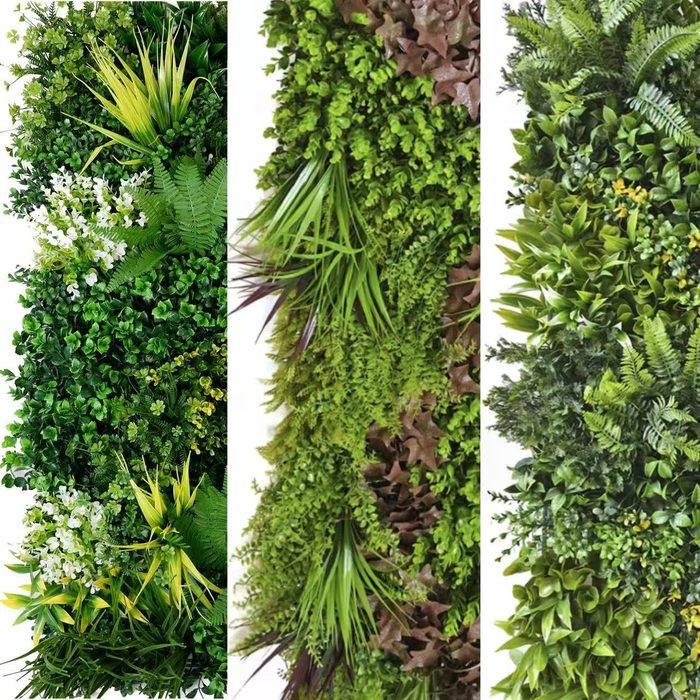
An artificial green wall, also known as a faux living wall or vertical garden, is a panel or series of panels designed to replicate the beauty and variety of live plants using high‑quality materials like colorfast polymers or UV‑protected textiles. Top brands craft lifelike foliage in myriad shapes and shades—think trailing ferns, spiky succulents, lush moss panels, or even flowering designs—that can be installed on any vertical surface.
Unlike traditional living walls, there’s no complex irrigation, fertilization, or exposure requirements. Whether your goal is to create biophilic wellness benefits or simply mask unsightly drywall, artificial green walls can be scaled, styled, and customized for both residential and commercial applications.
Living walls are beautiful, but they come with significant ongoing costs. A 2025 comparison shows that artificial green walls excel in installation, maintenance, durability, and life with pets. The maintenance and resource costs of a living wall can far exceed its initial installation price.
Modern artificial systems have evolved far beyond their early “plastic” reputation. They’re built with realistic leaf textures and botanical accuracy that complement contemporary interiors while keeping visual warmth intact.
Here’s something that surprises many people: even exposure to artificial greenery can trigger the same biophilic responses as real plants. Replica greenery stimulates feelings of calm and productivity while maintaining consistent beauty over time. Designers can strategically use artificial green walls in wellness‑oriented environments such as healthcare centers, co‑working spaces, and retail interiors to create nature‑inspired comfort zones without maintenance constraints.
Types of Artificial Green Walls
- Faux Green Wall Panels
These are the most common type. They come as modular panels that can be attached to any vertical surface. The panels are typically made from high‑quality synthetic materials like PE (Polyethylene) and feature a mix of foliage types.
Best for: Large installations, commercial spaces, and any application where you want a dense, lush look.
Key feature: The most common mistake in artificial green wall design is treating the installation as a wall covering like wallpaper. Done right, an artificial plant wall is a focal point—something that anchors the room and commands attention from the moment someone walks in. - Preserved Moss Walls
Preserved moss walls sit somewhere between live and artificial: no watering or sunlight required, but with the texture and warmth of genuine plant material. Real moss is treated and preserved to maintain its appearance indefinitely.
Best for: High‑end interiors, design‑conscious environments, and spaces where a soft, textural look is desired.
The catch: Moisture, direct sunlight, and exposure to heavy foot traffic will degrade preserved moss. Think of preserved plant walls as a premium interior finish—excellent in the right application, but not a universal solution. - Artificial Moss Walls
Artificial moss walls are made entirely from synthetic materials that mimic the look of preserved or living moss. They aim to provide the same visual impact as the real thing, but without the complications of keeping moss alive indoors or outdoors.
Best for: Commercial spaces such as offices, hotels, restaurants, and retail environments.
Pros:
Unique aesthetic: Moss has a distinctive soft and textural quality that creates a calming, natural atmosphere
Low maintenance: Artificial moss avoids the humidity control and temperature requirements of real moss
No irrigation or soil needed: Can be installed in windowless corridors, bathrooms, or shaded offices
Cons:
Limited realism: Up close, the flat, uniform texture can appear unnatural
Narrow design possibilities: Moss walls generally come in one look: a flat, green, velvety surface
Dust accumulation: Cleaning can be tricky, since the texture makes it hard to wipe or brush down without damaging the surface - Artificial Succulent Green Walls
Succulents are one of the most popular styles in artificial green wall design. They have natural structure, variation, and geometry that holds depth and shadow well even in synthetic form.
Best for: Modern commercial interiors, hospitality environments, and anywhere a clean architectural finish is the goal.
Why it works: A well‑designed artificial succulent wall reads more like a sculptural installation than décor. - Portable Artificial Green Walls
There’s growing demand for flexibility in commercial environments, and portable artificial green walls address that directly. Built on rolling frames or modular panels, these systems can be moved, reconfigured, transported, and stored between uses.
Best for: Trade shows, corporate events, temporary partitions, and photo backdrops.
ROI: A single well‑built portable faux green wall can deliver consistent visual impact every time without rebuilding from scratch. - Boxwood Walls
Boxwood panels are dense, regular‑textured, and formal. They’re the most widely used type and suit corporate and event applications where a clean, structured aesthetic is required.
Best for: Corporate interiors, event backdrops, and any space that needs a tidy, uniform look.
Where to Use Artificial Green Walls?
Residential Spaces
Living Rooms: A full artificial grass wall behind a sofa or media console creates a grounded focal point. Pair with linen upholstery, warm wood tones, and sculptural lighting for a refined look.
Bathrooms: Add a vertical section of faux greenery behind a soaking tub for a spa‑like feel.
Entryways: A lush green wall welcomes guests and sets the tone for the entire home.
Home Offices: Greenery has been shown to boost productivity and reduce stress. An artificial green wall behind your desk creates a calming backdrop for video calls.
Commercial Spaces
Hotel Lobbies: The highest‑impact locations tend to be behind reception desks, as backdrops in hospitality spaces, or framing signage and brand elements where visual weight matters.
Restaurants: Green walls soften commercial interiors and create a more inviting atmosphere. They’re ideal for restaurant terraces and indoor dining areas.
Corporate Offices: Artificial green walls can be used as branded logo walls, where company logos sit proudly against lush foliage, creating memorable first impressions for visitors and clients.
Retail Stores: Green walls draw attention and create an immersive shopping experience.
Healthcare Facilities: Artificial greenery can create nature‑inspired comfort zones without maintenance constraints.
Outdoor Spaces
Outdoor artificial green walls come with a different set of durability requirements. Sun, wind, and temperature variation will degrade low‑quality materials quickly, often within a single season.
Key requirement: UV stabilization is non‑negotiable. So is weather‑resistant backing and a mounting system designed for sustained exposure.
Best for: Patios, rooftops, and building facades where irrigation is impractical.
How to Choose the Right Green Wall?
- Consider the Location
Indoor vs. Outdoor: For outdoor installations, look for UV‑resistant panels with built‑in UV inhibitors. High‑quality systems use UV inhibitors built into the material itself, not just applied as a surface coating.
Light Exposure: Artificial green walls are especially advantageous for locations lacking sunlight, stable temperature, or humidity, such as north‑facing rooms, basements, or windowless offices. - Assess the Space
Size: Measure your wall carefully. For walls with irregular or complex shapes, consulting a professional can ensure precise measurements.
Style: Consider your design vision and the natural light the space receives. This will influence plant styles and colours. - Prioritize Quality
Why quality matters: Low‑quality panels often suffer from repetitive patterns, unrealistic colouring, plastic shine, sparse foliage coverage, and visible joins between panels.
The test: If a green wall is positioned where people will spend time looking at it, investing in a high‑end product becomes essential. High‑quality artificial plant wall decor achieves realism through variation. Natural colour tones, layered foliage, and dense planting compositions create depth and authenticity that cheaper alternatives simply cannot replicate. - Look for Safety Certifications
Fire‑rated: For commercial and residential projects, look for fire‑rated panels. FireSilx fire‑retardant options are available for when fire safety is paramount.
UV‑resistant: UVSilx colourfast panels made from UV‑resistant foliage will maintain their appearance even in direct sunlight. - Choose the Right Foliage Mix
A well‑designed artificial green wall layers shapes, tones, textures, and colours. When every panel reads as the same flat shade of green, it signals fake immediately. Depth and variation are what make it believable.
Think of it less like installing a product and more like composing a piece of wall art.
Artificial Green Walls Installation Guide
Essential Tools
Before starting the installation, gather all the necessary tools:
A drill
Timber screws
Washers (essential for preventing panels from slipping)
A spirit level
Wire clippers or a sharp knife (for trimming panels to size)
The beauty of installing artificial green walls lies in its simplicity—no specialized tools are required, making it an accessible project for DIY enthusiasts.
Step-by-Step Process
Step 1: Measure Your Space
Calculate the area for your artificial green wall panels by multiplying the length and height of your wall to find the square meterage. Use these measurements to determine how many panels you’ll need.
Step 2: Prepare Your Wall Surface
Understanding the wall type you’re installing onto ensures secure attachment:
For plasterboard, concrete, or brick surfaces: use nylon wall plugs
For wood: use wood screws
Secure the panels 20cm in from each corner for stability
Step 3: Install the Panels
Most artificial green wall panels come with easy installation instructions and can be attached using adhesive or mounting hardware. Installation typically involves mounting a secure framework or grid on your wall.
Step 4: Trim and Adjust
Use clippers or a sharp knife to trim panels to size. Proper alignment and spacing are crucial to creating a stunning green wall with no visible gaps.
Step 5: Fluff and Finish
Once in place, manually adjust and fluff the foliage to avoid a flat, uniform appearance. This transforms the wall from a flat installation into a rich, three‑dimensional feature.
Artificial Green Walls Maintenance and Care
Artificial Green Walls
Artificial green walls require minimal upkeep, but they’re not no‑maintenance.
Dusting: A light dusting every few months with a soft brush, microfiber cloth, or a low‑suction vacuum (with brush attachment) will keep your wall looking fresh.
Cleaning: If cleaning is necessary beyond dusting, use a slightly damp cloth to wipe around the foliage areas. Artificial plants walls should be dusted and cleaned regularly, otherwise they will look dull pretty quickly.
Sunlight: Keep them out of direct sunlight to avoid colour loss and brittleness.
UV Protection: For outdoor installations, UV protection is essential. If the manufacturer’s coating wears over time, reapply UV protective spray annually.
Moss Walls
Don’t Water It: Preserved and artificial moss walls do not require watering. Avoid spraying or misting the moss, as moisture can damage its preserved state.
Dusting: Gently dust the moss surface with a soft cloth or feather duster to remove any accumulated dust.
Avoid Moisture: Do not install near heat sources such as chimneys or heaters.
UV Protection: Ensure your moss wall is UV‑stable, especially if installed in bright, sunlit areas.
Artificial Green Walls Design Inspiration
- The Feature Wall
Increasingly, artificial green walls are becoming the centrepiece of a space rather than a supporting feature. They can transform a plain wall into a striking focal point. - The Branded Logo Wall
Businesses often install logo walls where branding sits proudly against lush foliage, creating memorable first impressions for visitors and clients. - The Room Divider
Use modular green walls to divide spaces. They create separation while still feeling open and welcoming. - The Tropical Bathroom
Add a vertical section of faux greenery behind a soaking tub for a spa‑like feel. - The Living Art Wall
Blend greenery with texture and branding. Designers are incorporating faux greenery alongside slatted wood, metal accents, and even integrated lighting or LED neon signs to create texture‑rich compositions.
Artificial green walls and moss walls have come a long way from the plastic‑looking varieties of the past. Today’s high‑quality installations are virtually indistinguishable from the real thing—and they come with none of the maintenance headaches.
Whether you’re transforming a hotel lobby, a corporate office, or your own living room, an artificial green wall offers:
Instant impact: No waiting for plants to grow
Zero maintenance: No watering, pruning, or pest control
Year‑round beauty: No seasonal changes or wilting
Design flexibility: Customizable to any space, style, or brand
Biophilic benefits: The calming, productivity‑boosting effects of nature
As one designer put it: “Once you begin viewing a green wall as artwork rather than just decorative planting, the possibilities become endless”.
REQUEST QUOTE
Please fill out the form below and a representative will contact you. Thank you.
Sales Manager:Nina
Tel:
+86-19924394700
Email:
leafhometrade@gmail.com