
How can you use Artificial Vines and Garlands to Wrap, Drap, and Transform Your Space?
A Simple Artificial Vines Changed Everything. Let me tell you about a moment that completely shifted how I think about interior design.
I was helping a friend decorate her new apartment. She had beautiful furniture, great lighting, and a lovely color palette. But something was missing. The space felt a little flat, a little unfinished. We moved chairs, adjusted lamps, rearranged artwork. Nothing seemed to fix it.
Then I pulled out a simple artificial vine—just a basic 6‑foot strand of green leaves. I draped it across the top of her bookshelf. I wrapped it loosely around a floor lamp. I let it trail down the side of a wall mirror.
It took five minutes.
The transformation was immediate. The room went from “nice” to “stunning.” The greenery softened the hard edges, added movement, and created a sense of flow that had been missing. My friend looked around and said, “It’s like the room just breathed.”
That was the day I fell in love with artificial vines and garlands. They are, without a doubt, the most versatile, forgiving, and impactful design tools in my kit.
What Are Artificial Vines and Garlands?
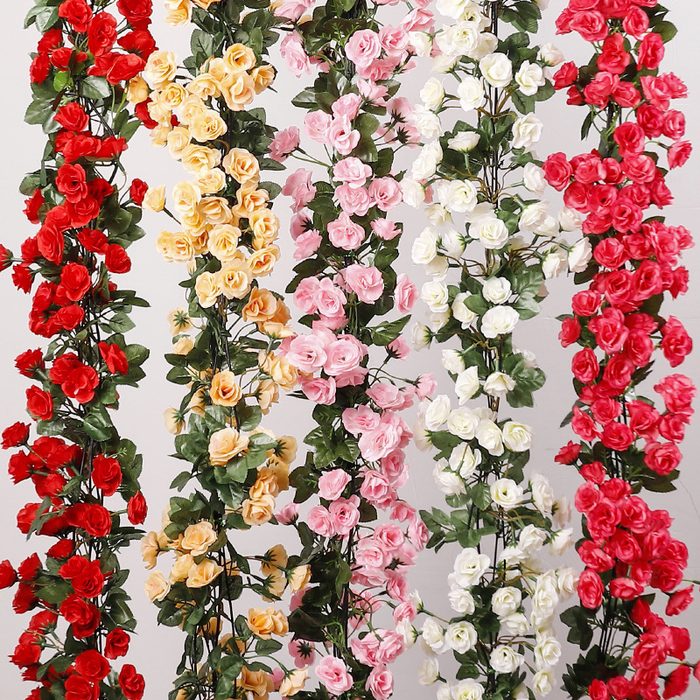
An artificial vine or garland is a long, flexible strand of foliage, flowers, or both. It’s designed to be wrapped, draped, hung, or arranged to create a natural, flowing look. Unlike a potted plant that sits in one spot, a vine or garland can travel across surfaces, down walls, and around objects.
Vines are typically more naturalistic, with a single trailing stem and leaves spaced along it. They mimic climbing plants like ivy, pothos, or jasmine.
Garlands are often fuller, with leaves and sometimes flowers clustered more densely. They mimic the kind of decorative swags used in weddings and events.
The best part: Both are incredibly flexible. They have a bendable stem—a built‑in wire core—that lets you shape them exactly how you want. You can loop them, twist them, let them cascade, or wrap them around almost anything.
What materials are Artificial Vines and Garlands Made Of?
Leaves and Flowers
PE (Polyethylene) : Highly realistic, soft, and durable. The gold standard for foliage. It holds color well and resists fading.
Polyester fabric : Soft and realistic, especially for flowers. Often called “silk,” but it’s actually polyester.
PVC : Durable but can look shiny and stiff. Better for outdoor use if UV‑protected.
Flocking : A fuzzy surface created with nylon or viscose short fibers. Used for frost or moss effects.
Stem and Core
Iron wire : The inner core that makes the vine bendable.
Paper‑wrapped wire : Common for single‑stem vines.
Plastic‑coated wire : Rust‑proof and durable for outdoor use.
Rattan core or jute rope : Used for rustic or natural‑looking vines.
Finishes
Matte finish : Non‑reflective and more natural.
Glossy finish : Waxy and shiny, good for tropical looks.
Flocked finish : Soft, fuzzy, or frosty.
UV coating : Protects against fading for outdoor use.
Decorative Ideas for Every Space with Artificial Vines and Garlands
Living Rooms – Add Warmth and Texture
Bookshelf Draping
Run a vine across the top of a bookshelf and let the ends trail down. It softens the straight lines of the shelves and adds visual interest. For a fuller look, layer two or three vines with different leaf shapes or colors.
Lamp Wrapping
Wrap a vine loosely around a floor lamp or table lamp, starting at the base and spiraling upward. The greenery creates a beautiful organic shape and casts interesting shadows.
Mirror Framing
Drape a vine over the top corner of a wall mirror, letting it cascade down one side. It’s a simple touch that makes the mirror feel more intentional.
Mantel Styling
Lay a garland across the mantelpiece, letting it droop slightly in the middle or hang over the edges. Add a few small votive candles or fairy lights for a cozy, romantic look.
Doorway Swags
Hang a garland above a doorway to create a soft, welcoming frame. This works beautifully with vines that have trailing elements, like ivy or jasmine.
Dining Rooms – Elevate Your Entertaining
Table Runner
Lay a garland down the center of the dining table as a runner. Add a few tapered candles, small vases, or scattered flowers to complete the look. It’s an easy way to elevate a dinner party without overcomplicating things.
Napkin Rings
Cut small pieces of vine and wrap them around cloth napkins, tucking the ends in to hold. It’s a tiny detail that makes a big impression.
Chandelier Wrap
Carefully wrap a vine around the chain or arms of a chandelier. It softens the fixture and adds a touch of organic charm to the room.
Bedrooms – Create a Dreamy Vibe
Headboard Greenery
Drape a vine across the top of the headboard, letting it trail down one or both sides. It creates a soft, romantic canopy effect without requiring any hardware.
Nightstand Accent
Place a small piece of vine on a nightstand, allowing it to cascade over the edge. It adds a touch of greenery without overwhelming the space.
Window Framing
Let a vine cascade from the top of the window frame, mimicking a natural curtain. Pair it with sheer curtains for a dreamy, boho look.
Kitchens – Fresh and Inviting
Above the Cabinets
Place a long garland on top of the kitchen cabinets, letting it spill over the edges. It softens the hard lines of the cabinetry and creates a lush, lived‑in feel.
Open Shelving
Drape a vine along the edge of an open shelf. It can trail between cookbooks, plants, and jars for a relaxed, collected look.
Hanging Rail or Hook
Hang a vine from a hook on the ceiling or a rail, letting it cascade down near a window or above the sink.
Bathrooms – Spa‑like Serenity
Mirror Accent
Drape a small vine over the top corner of the bathroom mirror. It adds a fresh, spa‑like touch with zero humidity risk.
Towel Rack Decoration
Wrap a vine around a towel rack or ladder. It turns an everyday item into a decorative feature.
Bathtub Side
Let a vine trail down the side of a bathtub from a shelf or ledge. It creates a peaceful, nature‑inspired retreat.
Entryways – First Impressions That Last
Staircase Bannister
This is one of the most impactful uses. Wrap a garland around the bannister, securing it with small ties or wire. Let it wind from top to bottom for a dramatic, elegant look.
Console Table Drape
Drape a vine along the edge of a console table, letting it cascade down the sides. Add a lamp, a vase, or a stack of books for a styled vignette.
Door Frame
Hang a garland above the front door or along the frame. It’s a warm, welcoming touch that sets the tone for your whole home.
Outdoor Spaces – Weather‑Ready Greenery
Patio Pergola
Wrap vines around the beams or posts of a pergola. They soften the structure and create a lush, shaded feel. For outdoor use, choose UV‑resistant vines.
Balcony Railing
Let a vine cascade over the balcony railing. It’s a simple way to add privacy and greenery to an outdoor space.
Fence or Wall
Attach a vine to a fence or exterior wall using small hooks or clips. It can create a charming, overgrown effect without the maintenance.
Outdoor Dining
Use a garland as a centerpiece on an outdoor table. It’s a beautiful way to dress the table for a summer dinner party.
Why Vines and Garlands Are Perfect for Events?
Vines and garlands are a dream for event decor. They’re lightweight, easy to transport, and simple to install. They can cover long tables, frame doorways, and line aisles in minutes. They also store well and can be reused for multiple events, making them a sustainable choice.
Ceremony Arches
Wrap vines or garlands around a metal or wooden arch. Leave some sections bare and let others be fully covered for a natural, organic look.
Aisle Markers
Place small vines along the aisle, draping them over chairs or shepherd’s hooks. They create a lush, romantic pathway without blocking the view.
Ceiling Canopies
Suspend vines from the ceiling to create a cascading canopy effect. Use clear fishing line or thin wire for an almost invisible support. This works beautifully for receptions and photo backdrops.
Chair Backs
Drape a small piece of vine over the back of every other chair. It’s a subtle touch that ties the whole room together.
Bar and Buffet
Run a garland along the front of the bar or buffet table. It turns a functional area into a beautiful focal point.
Photo Backdrops
Attach a garland to a wooden frame or wall to create a stunning photo backdrop. Add flowers, signs, or fairy lights to complete the look.
Table Runners
For weddings and large events, garlands are the ultimate table runners. They work beautifully for long communal tables and can be customized with flowers, candles, or other décor. The greenery adds a sense of abundance and celebration that’s hard to achieve with other décor pieces.
Because artificial vines and garlands are flexible and wired, you can shape them to follow the lines of any surface—from a head table to a serving station—without gaps or awkwardness.
How to Choose the Right Vine or Garland?
Length Matters
Short vines (3 to 6 feet) : Best for bookshelves, lamp wraps, mirrors, and small accents.
Medium vines (6 to 10 feet) : Great for tabletops, mantels, window frames, and small arches.
Long vines (10 to 20+ feet) : Perfect for staircases, pergolas, large arches, and ceiling canopies.
The rule of thumb: Buy longer than you think you need. Extra vine can always be wrapped, tucked, or doubled back. Running short is frustrating.
Leaf Density and Size
Dense vines : Full and lush. Ideal for covering surfaces or creating dramatic swags.
Sparse vines : Airy and delicate. Good for minimal, understated looks.
Leaf size : Small leaves (like ivy) create a fine texture. Large leaves (like monstera) make a bold statement. Choose based on your space and style.
Color and Realism
Natural green : A blend of various green hues. The safest and most versatile choice.
Gradient or ombre leaves : Color transitions from one shade to another, adding depth and realism.
Mixed color or assorted color : Multiple colors in one vine or garland. Great for floral garlands.
Solid color : Simple and budget‑friendly, but less realistic.
The quality test : Look for embossed veins and subtle color variations. A high‑quality vine will have leaves that are different shades of green, mimicking the natural variation in real plants.
Material and Durability
Indoor use : Polyester or PE is fine. Look for a matte finish for realism.
Outdoor use : Must be UV‑resistant. Look for UV‑protected or UV‑stabilized vines. The leaves should be made from PE or durable PVC.
Light‑exposed areas : Even indoors, direct sunlight can cause fading. Choose UV‑resistant vines for windowsills or sunrooms.
Additional Features
Bendable stem : Essential for shaping and positioning. Most quality vines have a built‑in wire core.
Flame retardant : Important for commercial spaces and events. Look for flame‑retardant materials.
Flocked finishes : Great for winter, frost, or moss effects. Check for shedding before buying.
Flowers : Some garlands include flowers. This adds color and texture but also increases the price.
Artificial vines and garlands are among the most underrated, flexible, and impactful tools in interior styling. They don’t just add greenery—they add flow, texture, and a sense of lived‑in beauty.
From a bookshelf edge to a grand staircase, from a summer wedding arch to a year‑round coffee table centerpiece, the right vine or garland can transform any space in minutes.
REQUEST QUOTE
Please fill out the form below and a representative will contact you. Thank you.
Sales Manager:Nina
Tel:
+86-19924394700
Email:
leafhometrade@gmail.com