How can you reuse Thanksgiving artificial flower decorations for Christmas?
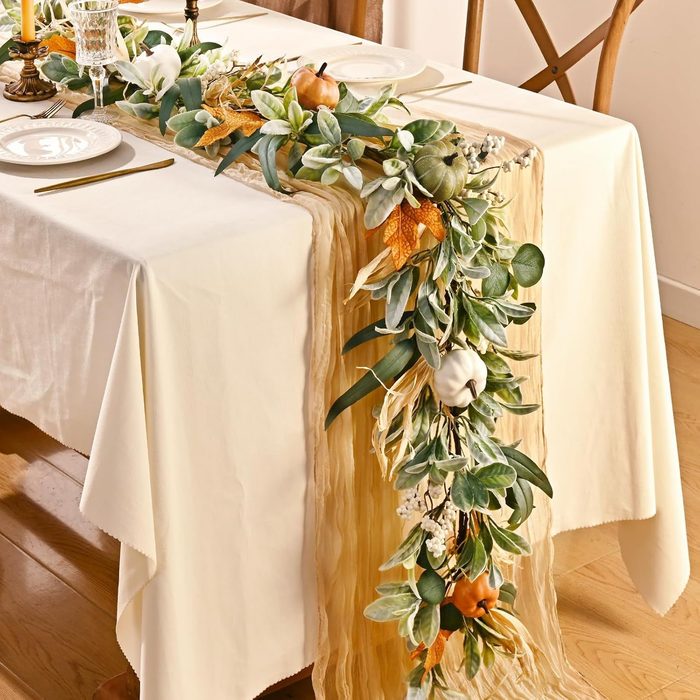
Don’t Put Away Your Thanksgiving artificial Flowers — Add Three Things and They Become a Christmas Centerpiece.
Every year, I see the same thing happen in homes. People spend time and money making a beautiful Thanksgiving table. Then, the day after Thanksgiving, they put everything away. The pumpkins go into the trash. The flowers go into a box. The table looks empty. Then, two weeks later, they start from zero for Christmas.
I want to show you a better way.
Your Thanksgiving flowers do not need to go away. In most cases, they are already 70 to 80 percent ready for Christmas. They already have warm colors, soft textures, and a centerpiece shape. You do not need to buy a whole new arrangement. You only need to add three things.
The three things are:
- Evergreen sprigs — pine, cedar, fir, or cypress.
- Red berries — or a small red accent that looks like berries.
- A little gold — a ribbon, a candleholder, a small ornament, or a metallic leaf.
That is it. Add these three things, remove a few Thanksgiving clues, and the same flowers become a Christmas centerpiece.
Why Thanksgiving artificial flower Can Stay?
Thanksgiving flowers and Christmas flowers are not as different as people think.
Thanksgiving is about warmth, harvest, family, and the end of autumn. Christmas is about light, evergreen, generosity, and the start of winter. Both seasons use rich colors. Both seasons use texture. Both seasons use a centerpiece to bring people to the table.
The colors of Thanksgiving are often orange, amber, rust, burgundy, cream, brown, and green. The colors of Christmas are often red, green, gold, white, and silver. Do you see the overlap? Burgundy is close to red. Cream is close to white. Green is already green. Brown and gold work together. The gap between the two seasons is smaller than it looks.
The problem is not the flowers. The problem is the seasonal signals around the flowers.
A pumpkin says Thanksgiving. An orange leaf says autumn. A burlap runner says harvest. A red berry says Christmas. A pine sprig says winter. A gold ribbon says holiday. So the smart move is not to replace all the flowers. The smart move is to change the signals.
This is what you do for someone who want a beautiful table without spending twice. I keep the main flowers. I remove the strong autumn signals. I add strong Christmas signals. The centerpiece feels new, but most of it is the same.
There is also a practical reason to reuse. Artificial flowers are an investment. A good artificial flower can last for years. But only if you treat it well. If you throw it into a bag every December and pull it out every November, it will bend, crush, and look tired. If you build one arrangement that can move from Thanksgiving to Christmas, you get more value from the same flowers. You also save time. You do not need to design from zero. You only need to edit.
And there is a personal reason. Reusing flowers can become a small family tradition. The same centerpiece appears on the Thanksgiving table. Then it changes for Christmas. Then it comes back next year. It becomes part of the rhythm of the home. That is a nice thing.
Change the Frame, Not Thanksgiving artificial flower
The frame is everything around the flowers:
- The container.
- The ribbon.
- The candles.
- The small decorations.
- The table linen.
- The light in the room.
- The space around the centerpiece.
If you change the frame, the flowers look different. This is true in floristry and in interior design. A white bowl makes flowers look fresh and modern. A brass urn makes them look old and warm. A red ribbon makes them look like Christmas. A burlap ribbon makes them look like autumn.
So do not ask, “How can I make these flowers look like Christmas?” Ask, “What can I add or remove so the whole picture says Christmas?”
The answer is the three things.
But before we add, we need to remove. Christmas is not only about adding red and green. It is also about taking away the things that say “Thanksgiving only.” If you add pine to a pumpkin, you get confusion. If you add red berries to orange leaves, you get a mixed message. The eye wants a clear season.
So here is the simple formula:
Keep the base. Remove the autumn clues. Add the three Christmas clues.
The base is the main flowers. The autumn clues are pumpkins, orange leaves, harvest ribbons, and very bright yellow-orange tones. The Christmas clues are evergreen, red berries, and a little gold.
Thanksgiving artificial flower of the three things
Evergreen is the most important of the three things. If you only add one thing, add evergreen.
Evergreen means plants that stay green in winter. In floral design, the most common are pine, cedar, fir, and cypress. Each one has a different look.
- Pine has long needles and a clean, classic shape. It says “Christmas” right away.
- Cedar is soft, feathery, and a little droopy. It adds movement and a natural look.
- Fir is full and dense. It is good for filling space.
- Cypress is flat and elegant. It is good for a modern look.
You do not need all four. Pick one or two. For a Thanksgiving-to-Christmas conversion, I like a mix of pine and cedar. Pine gives the classic Christmas signal. Cedar gives softness and covers the edges.
How much evergreen do you need? For a centerpiece that is about 12 to 16 inches wide, you need about three to five small sprigs. A sprig is a small branch, about 6 to 10 inches long. Do not use huge branches. You are not building a wreath. You are adding a signal.
Where do you put the evergreen? There are three good places.
First, at the base. Put evergreen under the main flowers, near the container. This makes the arrangement look grounded. It also hides the stems or the artificial stems.
Second, at the sides. Put one sprig on the left and one on the right. Let them come out a little. This makes the centerpiece look wider and more festive.
Third, at the top or back. Put one small sprig at the top back. This adds height without blocking the view. If people are sitting across the table, they should still be able to see each other. So keep the tall part at the back, not in the middle.
If you use artificial evergreen, you can bend the stems to make them fit. Most artificial pine and cedar have wire inside. That is good. You can shape them. If you use fresh evergreen, cut the stems at an angle and put them in a small water source. But for a centerpiece that sits on the table for several weeks, artificial evergreen is easier. It does not dry out. It does not drop needles. It does not need water.
One warning: do not cover your main flowers. The evergreen is a frame, not a blanket. You still want to see the Thanksgiving flowers. The point is to make them look new, not to hide them.
If your Thanksgiving arrangement is very orange, add more evergreen. Green cools down orange. It makes the whole arrangement feel more winter. If your arrangement is already burgundy and cream, you can use less evergreen. The colors are already close to Christmas.
Red berries are the second thing. They are small, but they do a lot of work.
In floral design, red berries are a “seasonal signal.” They say holiday, winter, and celebration. They also add a small pop of color. You do not need many. A few clusters are enough.
You can use artificial red berries. Common types are red hypericum berries, cranberry clusters, pepper berries, or simple red berry sprays. You can also use small red ornaments if you do not have berries. The shape is not as important as the color and the cluster.
How many red berries do you need? For a medium centerpiece, use three to five small clusters. Put them in odd numbers. Odd numbers look more natural. Three clusters are better than four. Five are better than six.
Where do you put them? Put them near the evergreen. Let them peek out. Do not put them all in one spot. Spread them around the arrangement. One cluster on the left, one on the right, one near the front. This makes the eye move around the centerpiece. It feels richer.
If your Thanksgiving flowers already have burgundy or dark red, you can use fewer berries. The burgundy flowers are already close to red. The berries will connect them to Christmas. If your Thanksgiving flowers are mostly orange and yellow, use a few more berries. They will help push the color toward Christmas.
Do not use too many red berries. This is a common mistake. People think more red means more Christmas. But too many red berries can make the arrangement look like a craft project. You want the berries to look like they grew there. A few clusters are enough.
If you cannot find red berries, here are some simple substitutes:
- Small red ornaments on wire.
- Red wooden beads.
- A red berry ribbon.
- Small red apples or faux apples.
- Red dried flowers, like red preserved hydrangea.
Add a small, bright red accent. It does not need to be a real berry.
The third thing is a little gold. This is the thing that makes the arrangement feel like Christmas and not just “winter.”
Gold is a holiday color. It catches light. It makes a table feel special. But gold is strong. A little goes a long way. You do not want the whole centerpiece to look like a golden statue. You want a small shine.
You can add gold in many ways:
- A gold ribbon around the container.
- A gold candleholder next to the centerpiece.
- A few small gold ornaments tucked into the flowers.
- Gold-painted leaves or gold artificial leaves.
- A gold tray under the centerpiece.
- Gold flatware or gold-rimmed glasses on the table.
Pick one or two. Do not use all of them. For example, a gold ribbon plus one gold candleholder is enough. A gold tray plus gold ornaments is also enough. If you use a gold ribbon, you may not need gold ornaments. If you use gold candleholders, you may not need a gold ribbon.
The easiest gold addition is a ribbon. Use a wire-edge ribbon so you can shape it. A simple bow at the front of the container can change the whole look. If your container is round, put the bow at the front. If your container is long, put a small bow at one end, not in the middle. Asymmetry looks more natural.
The second easiest gold addition is a candle. A gold candleholder on each side of the centerpiece adds light and shine. It also makes the table feel like a holiday table. But please read the candle safety section later in this guide. Candles are beautiful, but they need care.
The third easy gold addition is a small ornament. You can tuck two or three small gold balls into the evergreen. Do not put them on top of the main flowers. Put them low, near the greenery. They will catch the light and look like little jewels.
One warning: do not mix too many metals. If you use gold, do not also use a lot of silver. A little silver is fine, but too much looks messy. Choose one main metal for the table. Gold is warm and works well with Thanksgiving-to-Christmas colors. Silver is cool and works well with blue, white, and green. For this conversion, gold is usually easier.
What to Remove from Thanksgiving artificial flower?
Pumpkins. A pumpkin is a strong autumn signal. If you want a Christmas centerpiece, take out the pumpkin. If you love the pumpkin, use a white pumpkin and paint it gold. But for most people, it is easier to remove it.
Orange and yellow leaves. These are autumn colors. Remove them if they are very bright. You can keep a few if they are deep rust or brown, but bright orange leaves will fight with red berries.
Burlap ribbons. Burlap is a harvest texture. It says “farm” and “autumn.” Replace it with a velvet ribbon, a satin ribbon, or a gold ribbon. If you want a natural look, use a wide linen ribbon in cream or dark green.
Corn husks, wheat, and dried grasses. These are beautiful for Thanksgiving, but they are not Christmas. Remove them. If you want a natural look, replace them with cedar or cypress.
Very bright yellow-orange flowers. You do not need to remove all of them. But if the arrangement is mostly bright orange, it will be hard to make it look like Christmas. You can keep one or two for warmth, but let the red, green, and cream do more work.
Harvest signs. Words like “Give Thanks” or “Harvest” are Thanksgiving signals. Remove them. Replace them with a small gold ornament or a simple red ribbon.
What should you keep?
Keep cream flowers. Keep burgundy flowers. Keep deep red flowers. Keep green leaves. Keep brown twigs if they are dark and natural. Keep white flowers. These colors work for both seasons.
If you are not sure, use this rule: If it looks like a pumpkin patch, remove it. If it looks like a winter forest, keep it.
When to Convert Thanksgiving artificial flower?
The best time to convert is the day after Thanksgiving or the first weekend after Thanksgiving. This is when the Thanksgiving table is still out, but the Christmas season is starting. You do not need to wait until December.
If you convert too early, it may feel too Christmas before Thanksgiving. If you convert too late, you may lose the energy to do it. The day after Thanksgiving is a good balance.
If you are hosting Thanksgiving, you can prepare the three additions before the holiday. Put the evergreen, red berries, and gold ribbon in a box. On the day after Thanksgiving, you can convert the centerpiece in 20 minutes. This is a nice ritual. It helps you move from one season to the next.
If you are not hosting, you can convert when you set up your Christmas decorations. Use the same centerpiece for the dining table. It will save you time and money.
Thanksgiving artificial flower Three Variations
You do not need to make the same centerpiece every year. Here are three simple variations using the same idea.
Variation 1: Classic Red, Green, and Gold
This is the easiest and most traditional.
- Keep cream or burgundy flowers.
- Add pine and cedar.
- Add red berries.
- Add a gold ribbon.
- Use gold candleholders.
This version works in almost any home. It is warm and familiar. It looks good in photos. It is also easy to store.
Variation 2: Soft Winter White
This version is quieter and more modern. - Keep white or cream flowers.
- Add cedar and cypress.
- Add a few red berries, but not too many.
- Add a gold ornament or a gold candleholder.
- Use a white or silver container.
This version works well with a white tablecloth. It looks clean and calm. It is good for a small table.
Variation 3: Natural Woodland
This version is warmer and more natural. - Keep burgundy or deep red flowers.
- Add pine and cedar.
- Add red berries.
- Add brown twigs.
- Add a gold ribbon or a small gold ornament.
- Use a wooden or copper container.
This version works well with a rustic table. It looks like a winter forest. It is good for a family dinner.
You can also change the variation from year to year. Use the same flowers, but change the ribbon and the container. This keeps the centerpiece interesting without buying new flowers.
Thanksgiving flowers do not need to be put away. They are not finished after the turkey is gone. They are a base. They are a starting point. With three simple additions, they can become a Christmas centerpiece.
This is good for your budget. It is good for your time. It is good for the environment, because you are using what you already have. And it is good for your home, because the table stays beautiful from November to December.
REQUEST QUOTE
Please fill out the form below and a representative will contact you. Thank you.
Sales Manager:Nina
Tel:
+86-19924394700
Email:
leafhometrade@gmail.com