
How Artificial Tree Trunks Are Made to Look Real?
The secret to tree’s realism wasn’t the leaves or the branches—it was the Artificial Tree Trunks. Specifically, it was the PU Foam Trunk / Artificial Bark that had been engineered to mimic every curve, crevice, and texture of a real olive tree trunk. you’ll never look at a faux trunk the same way again.
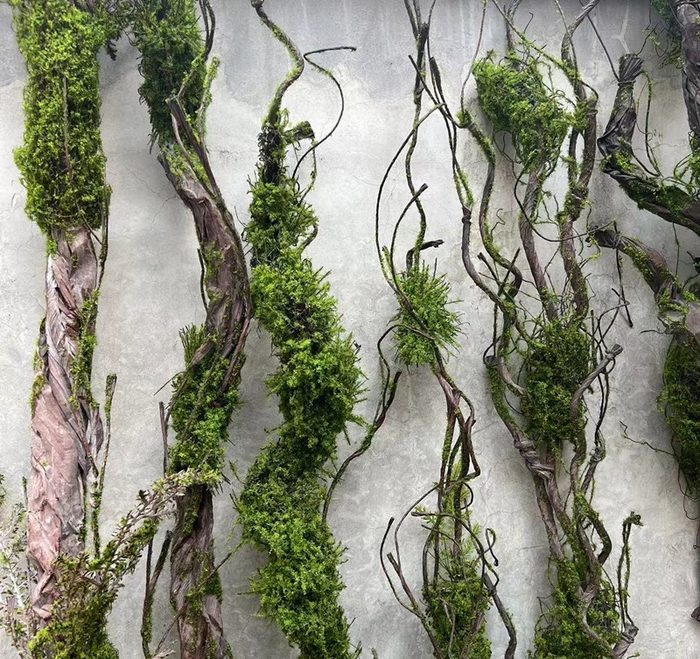
Why Artificial Tree Trunks Matter?
It’s easy to obsess over leaves. They’re colourful, they move, they catch the light. But the trunk is the foundation of any tree—literally and figuratively. A tree with beautiful leaves and a cheap trunk is like a person with a great smile and a bad haircut. Something is just… off.
A lifelike trunk is essential for creating a convincing artificial tree. The trunk is the first thing people notice from a distance. If it looks plastic, the whole tree looks fake.
Structure and stability: The trunk is also the structural backbone. It supports the weight of the branches and leaves, and it needs to be strong enough to stand upright for years.
The texture, colour, and shape of the trunk determine the overall character of the tree. A smooth, straight trunk suggests a young, cultivated tree. A gnarled, twisted trunk suggests an ancient, weathered specimen. The trunk tells the story.
The Challenge of Replicating Bark
Real tree bark is incredibly complex. It’s not a smooth surface—it’s a rough, irregular landscape of ridges, furrows, cracks, and textures. Every tree species has a different bark pattern:
Oak: Deep furrows and rugged ridges.
Birch: Smooth, papery layers that peel horizontally.
Palm: Distinctive “stair-step” patterns from old leaf bases.
Olive: Twisted, knobby, and deeply fissured.
Capturing this complexity in a manufactured product is one of the biggest challenges in artificial plant engineering. And it’s where PU foam truly shines.
Why PU Foam for Artificial Tree Trunks?
PU (Polyurethane) foam is a synthetic polymer material that can be formulated to have a wide range of properties—from soft and flexible to rigid and dense. For artificial tree trunks, we use high-density rigid PU foam. PU foam is much lighter than solid wood or plastic, making it ideal for large trees that need to be moved or shipped. PU foam can be injected into complex moulds that capture every detail of real bark. High-density PU foam resists cracking, chipping, and weathering. PU foam takes paint beautifully, allowing for realistic bark colours and finishes. Compared to solid wood or complex metal structures, PU foam offers a great balance of cost and quality.
PU Foam Trunk / Artificial Bark has become the industry standard for premium artificial trees.
Realism: PU foam can be moulded to replicate even the most intricate bark textures. The surface with simulated bark texture is so detailed that it can fool even trained botanists.
Weight: Solid wood trunks are heavy and expensive to ship. PU foam trunks are lightweight, reducing shipping costs and making installation easier.
Flexibility: PU foam can be shaped and painted to match any tree species—from the smooth, peeling bark of a birch to the deeply furrowed bark of an oak.
Durability: High-quality PU foam resists cracking, fading, and weathering, making it suitable for both indoor and outdoor use.
How PU Foam Trunks Are Made?
Step 1: The Sculpt – From Art to Engineering
Every great PU foam trunk starts with a sculpt. This can be one of two things:
Natural sculpt: The trunk is shaped by hand using a reference image of a real tree. This is the traditional method, and it’s still used for custom or one‑off pieces. Skilled artisans use carving tools to shape the foam into a realistic trunk form, adjusting proportions, adding knots, and creating an organic flow that no two pieces will share.
3D scan to mould: For mass production, modern engineering takes over. An actual tree is 3D scanned—a laser scanner captures every surface detail, including the bark texture. That scan is used to create a precision mould for high‑volume output. This is the gold standard for consistency.
Engineer’s Note: The beauty of the 3D scan method is that it captures every microscopic detail—the subtle undulations of the bark, the natural taper of the trunk, even the tiny cracks and imperfections that make real trees look alive.
Step 2: Mould Making – Where Realism Is Locked In
The mould is the most critical element in the process. It determines the texture, shape, and overall realism of the trunk. Creating the mould is a multi‑stage process:
Master Pattern: The first step is to create a master pattern of the trunk. The pattern can be made from several materials—clay, resin, or wood—and must be exact. Every detail of the trunk is captured in the master pattern. For high‑end pieces, the pattern may be carved by hand, with artisans spending days refining the bark textures and natural undulations.
Silicone Rubber Mould: A silicone rubber mould is then taken from the master pattern. Silicone is flexible and can capture even the smallest details—every bark crevice, every knot, every organic imperfection. The silicone mould is then supported by a fibreglass mother mould to maintain its shape during the casting process.
Production Mould: For mass production, a metal mould is created from the master pattern. This mould will be used thousands of times, so it’s made from high‑grade steel and precision‑machined to ensure it captures every detail.
The Scale‑Up Challenge: Scaling a tiny branch texture to a 3‑metre tree trunk is not a simple linear process. Larger moulds can create subtle distortion if not carefully designed. To maintain true botanical accuracy, the mould must factor in the natural tapering and grain direction of the species being replicated.
Step 3: Injection Moulding – The Birth of the Trunk
With the mould ready, the trunk is produced through a process called reaction injection moulding (RIM) . This is a specialised version of foam molding:
- Two liquid components—a polyol and an isocyanate—are mixed together.
- The mixture is injected into the mould under high pressure.
- The chemical reaction causes the mixture to expand and foam, filling every cavity of the mould.
- After about 10–15 minutes, the foam has cured and solidified.
- The mould is opened, and the trunk is removed.
The result is a lightweight, durable trunk that perfectly replicates the shape and texture of the master pattern.
Why It Works: This process is known as foam molding—making PU foam tree trunks or foam bases. It’s efficient, cost‑effective, and delivers consistent quality.
Engineer’s Note: During the foaming stage, controlling variables like temperature, mould pressure, and injection speed is critical to producing a defect‑free trunk. Even minor changes can affect the density, structural integrity, and surface finish.
Step 4: Trimming and Finishing – The Handcrafted Touch
Once the trunk comes out of the mould, there’s still work to be done.
Flash removal: Excess foam ( flash / burr ) at the mould seams is trimmed away. Flash / Burr is the excess material left over from the injection moulding process—a thin, rough ridge along the edge where the two halves of the mould met. Skilled workers use precision knives and sanding tools to ensure smooth edges.
Surface preparation: The trunk is sanded and smoothed where needed, but the goal is to preserve the natural, rough texture of the bark. There’s a delicate balance between removing manufacturing imperfections and retaining the organic character of the trunk.
Hand carving: In some cases, additional bark textures are carved by hand to add depth and realism. This is where the true artistry comes in. Carving PU foam by hand creates unique bark textures and branch connections that reflect an understanding of how real tree trunks taper and fork.
Artificial Tree Trunks Painting and Finishing
This is where the trunk goes from “promising piece of foam” to “genuinely convincing bark.” The paint and finishing process is a multi‑stage operation that involves both art and science.
The Base Coat
The base colour is applied using spray painting or airbrushing. The base colour should be slightly lighter than the final desired shade, allowing room for darker glazes and highlights. For an olive tree, the base might be a warm grey‑brown. For an oak, a richer, warmer brown.
Dry Brush Highlighting – Making the Bark Pop
Dry brush highlighting is a key technique for creating depth. A nearly dry brush with a slightly lighter colour is lightly dragged over the raised areas of the bark. This creates highlights that mimic the way light hits real tree bark.
The trunk gains depth and realism. The highlights catch the light, making the trunk look three‑dimensional and alive.
Dry Brush Highlighting involves applying lighter colors to edges or raised areas. This simple technique transforms the trunk from a flat object to a textured, layered surface.
Antiquing and Weathering – Adding Character
Real trees aren’t perfect—they have scars, cracks, and weathering. This character is added through antiquing / distressed effect techniques:
Washes: Thin layers of dark brown, grey, or even green are applied and wiped off, settling in the crevices and adding depth. The technique simulates weathering and an aged look, making the trunk look like it has been exposed to the elements for decades.
Speckling: Tiny splatters of dark paint are added to simulate dirt or natural imperfections. This adds realism by giving the trunk a slightly grimy, lived‑in appearance.
Knots and burls: These are painted on by hand to add visual interest and authenticity. A well‑placed knot can make an artificial trunk look ancient and storied.
Matte Finish – The Final Seal
A matte finish is applied to protect the paint and eliminate the shiny, plasticky look that would instantly give away the artificial nature of the trunk. A matte coating reduces reflection and creates a natural, realistic appearance. A subtle sanded texture / frosted feel is often the last touch for a premium trunk.
UV Coating – For Outdoor Use
For trunks that will be used outdoors, a UV coating is applied to protect against UV aging. The coating increases durability and prevents cracking and fading. Without it, even the most beautifully crafted trunk will deteriorate in full sun.
Other Artificial Tree Trunks Materials
While PU foam is the gold standard, there are other materials used for artificial tree trunks.
Solid Wood Rod / Wooden Stick
A solid piece of wood—usually pine, birch, or poplar—that forms the trunk. Used for artificial tree trunks, especially in budget‑friendly products.
Natural appearance, sturdy, feels substantial. The Solid Wood Rod / Wooden Stick has a natural texture and weight that can be convincing from a distance.
Heavy (increases shipping costs), can warp in humidity, limited in size and shape. Solid wood trunks can also split or crack over time, and their weight can be a problem for large artificial trees.
Small to medium indoor trees, budget‑conscious projects.
Plastic Stem / PP Rod
A polypropylene rod that’s painted to look like wood. Polypropylene, not easily bent, it’s used where rigidity is required.
Cheap, lightweight, consistent.
Looks like painted plastic, limited realism, can become brittle over time. The Plastic Stem / PP Rod is the clear loser when it comes to realism.
Budget‑conscious projects where realism isn’t the priority.
Iron Wire / Steel Wire with Wrap
A wire core wrapped with paper, fabric, or plastic. Inner core, bendable, allowing for flexible positioning.
Flexible, can be shaped into natural curves. Paper Wrapped Wire is commonly used for single flower stems, but can also be used for small tree trunks.
Limited thickness, not suitable for large trees, can rust if not coated. The exposed wire ( Exposed Wire ) is a tell‑tale sign of a budget product.
Small trees, topiaries, and shaped arrangements.
Artificial Bark Wrap
A textured bark fabric or paper that’s wrapped around a structural core.
Lightweight, can mimic bark texture, cost‑effective.
Can look artificial up close, prone to peeling, limited durability. The wrap can crease, tear, or shift over time, revealing the structure underneath.
Budget outdoor trees, temporary displays, and products where the trunk isn’t the focal point.
Different PU foam molds are used for the bark textures of different tree species.
Olive Tree
Bark characteristics: Twisted, knobby, deeply furrowed. Olive tree bark is full of character—it’s gnarled and twisted, with deep crevices and a slightly silvery‑grey colour.
Moulds are created from actual olive tree trunks. The bark texture is captured in 3D, and the colouring includes subtle grey and silver highlights. Olive trees are one of the most popular artificial trees because their gnarled, ancient appearance adds instant character to any space.
Fiddle‑Leaf Fig
Bark characteristics: Smooth, greyish, with subtle horizontal lenticels. The trunk is relatively straight and uniform.
The mould captures the smooth texture and the characteristic horizontal spots (lenticels). The colouring is a soft grey‑brown, avoiding the high‑gloss finish that can give away a fake trunk.
Birch
Bark characteristics: Smooth, white, with horizontal lenticels. Birch bark is distinctive—it’s white with dark, horizontal slits. It often peels in papery layers.
The mould captures the smooth texture, and the painting process includes subtle shading to mimic the peeling effect. A matte finish is essential to avoid the glossy look that would instantly make it look fake.
Palm
Bark characteristics: Distinctive “stair‑step” pattern from old leaf bases. Palm trunks have a characteristic ringed pattern where old leaves have fallen off.
The mould captures the ringed pattern, and the painting includes subtle shading to enhance the three‑dimensional effect. The colouring is a warm brown, with some variations to mimic the natural patina of a real palm trunk.
Oak
Bark characteristics: Deeply ridged and furrowed. Oak bark is rugged and deeply textured.
The mould captures the deep furrows, and the painting includes rich, warm brown tones. Dry brush highlighting is used to add depth and dimension.
Artificial Tree Trunks Quality Control
Visual Inspection
Texture: The bark texture should be consistent and realistic. Look for deformation / warpage or scratch marks that could be a sign of manufacturing defects.
Colour: The colour should be consistent with natural variation. If the trunk is contrary to standard sample or color swatch, it’s a sign of poor quality.
Details: The trunk should have natural details like knots, burls, and cracks. If it looks like a perfectly smooth cylinder, it’s a budget product.
No visible glue: Glue Residue / Excess Glue is a tell‑tale sign of poor assembly.
No exposed wire: Exposed Wire is a manufacturing defect that should never appear on a premium product.
Tactile Inspection
Texture: The surface should feel rough and natural, not smooth or slick.
Density: The trunk should feel solid, not hollow or squishy.
Structural Inspection
Stability: The trunk should support the weight of the branches without deformation / warpage. If the trunk bends or sags, it’s a structural failure.
From the initial 3D scan of a real tree, through the precision mould making, to the painting and finishing process, every step is designed to capture the essence of nature and bring it into spaces where real trees can’t thrive.
REQUEST QUOTE
Please fill out the form below and a representative will contact you. Thank you.
Sales Manager:Nina
Tel:
+86-19924394700
Email:
leafhometrade@gmail.com