
Artificial Plant Materials From Polyester to TPE
It’s a friendly, comprehensive guide of every major artificial plant materials from the common to the exotic, from the budget-friendly to the premium.
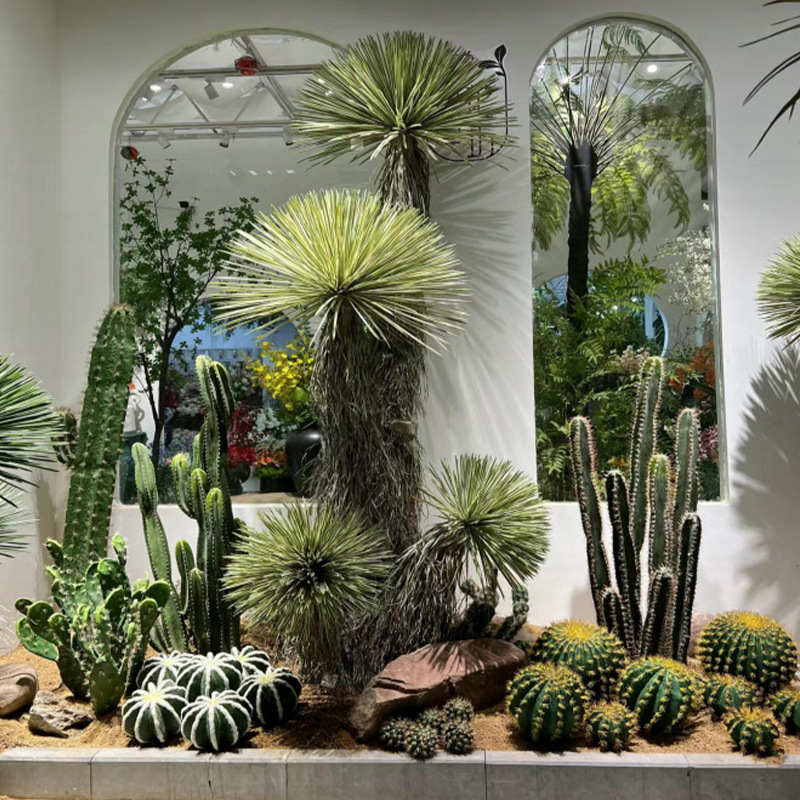
Artificial Plant Materials–The Fabrics
Polyester Fabric / Silk is the most common material for artificial flowers and some foliage. It’s a woven or non-woven synthetic fabric that’s cut, dyed, and heat-pressed into shape.
Silk Plant is the traditional name, but it’s actually made of polyester. The term “silk” dates back to the 18th century when artisans used real silk from silkworms to create artificial flowers. Today’s “silk” flowers are made from polyester, nylon, or other synthetic fabrics.
Roses, peonies, hydrangeas—anything with petals. Polyester takes dye beautifully, allowing for subtle color gradients that mimic nature. The fabric is slightly translucent, so light passes through it like real petals.
Polyester fades in UV light, absorbs moisture, and collects dust. It’s not suitable for outdoor use unless heavily treated with UV coatings—and even then, it’s a compromise.
Premium polyester flowers are hand-assembled with multiple petal layers and embossed vein details. Budget versions are single-layer, flat, and obviously fake.
If you want beautiful flowering plants for indoor use, polyester is your friend. Just don’t expect it to survive a sunny balcony.
Artificial Plant Materials–The Plastics
Polyethylene (PE) – The Realism King
Polyethylene (PE) is a thermoplastic polymer that’s become the industry benchmark for realistic foliage. It’s highly realistic, often used for leaves and succulents.
PE leaves are produced through injection molding or extrusion processes. The molten plastic is injected into a precision metal mold, cooled, and ejected. The mold is usually created from a 3D scan of a real leaf, capturing every vein and natural curve.
Foliage, foliage, foliage. Ferns, palms, succulents, broad-leaf tropical plants—PE is unbeatable. It’s durable, UV-resistant when stabilizers are added, and easy to clean. It holds its shape in any environment.
Real Touch PE is a premium variant that uses additional soft-touch processing to create a smoother surface and more natural leaf feel. It’s often used for broad-leaf indoor plants like Monstera and Fiddle-Leaf Fig.
PE is too rigid for the soft, layered look of a rose or peony. It also has a higher upfront cost due to the expensive molds required for injection molding.
Premium PE has a matte finish and subtle color variation. Cheap PE is shiny, flat, and obviously plastic.
For foliage, PE is the undisputed champion. If you want a plant that looks real, lasts for years, and can handle some sun, choose PE.
Polyvinyl Chloride (PVC) – The Old Reliable
Polyvinyl Chloride (PVC) is the material that built the artificial plant industry in the 1970s. It’s still everywhere, but it’s fallen from grace as PE has improved. It’s relatively stiff, often used for leaf veins or branches.
Cost-effective indoor or protected outdoor use. PVC is tough, waterproof, and doesn’t absorb moisture. It’s also easy to clean with a damp cloth.
PVC has a natural shine that makes it look plasticky. It tends to become brittle over time, especially in sunlight, and can crack or snap.
Good PVC has a matte finish and slight flexibility. Bad PVC is shiny, stiff, and brittle.
PVC is fine for budget-conscious buyers who don’t need museum-quality realism. But if you want something that looks truly lifelike, skip PVC and go for PE or PU.
Polyurethane (PU) – The Real Touch Wizard
Polyurethane (PU) is the material behind most “real touch” products. It’s used for highly realistic leaves or petals. PU coatings are applied over fabric or foam cores to create a soft, almost fleshy texture.
A fabric or foam base is shaped into a leaf or petal, then coated with a thin layer of PU. The PU dries to a soft, slightly tacky surface that feels remarkably like real plant tissue. It’s cool to the touch, has a subtle give when pressed, and doesn’t reflect light like plastic.
High-end floral arrangements and premium foliage. PU-coated petals are used in luxury artificial flowers that are meant to be touched—like wedding bouquets or high-end event decor.
PU coatings can degrade in UV light and peel over time. It’s also more expensive than PE or PVC.
Premium PU has a consistent, even coating that doesn’t peel or bubble. Cheap PU is uneven, sticky, or cracks.
If tactile realism matters—if your clients will touch the flowers—PU is your material. For everything else, PE is more cost-effective and durable.
Thermoplastic Elastomer (TPE) – The Rubber Wonder
Thermoplastic Elastomer (TPE) is the new kid on the block, and it’s fantastic. It has a soft rubber texture, used for succulents or fruits. It’s a hybrid material that feels like rubber but processes like plastic.
TPE is soft, flexible, and has a “fleshy” quality. Squeeze a TPE succulent leaf—it compresses and returns to shape, just like a real succulent. It’s mind-blowing.
Succulents, cacti, fruits, and vegetables. Any plant that needs a plump, fleshy texture. It’s also used for soft petal coatings in some premium flowers.
TPE is expensive, and its softness makes it unsuitable for structural leaves that need to hold their shape.
Premium TPE feels soft and springy. Cheap TPE is hard, stiff, or tears.
If you want a succulent that actually feels like a succulent, TPE is the only choice. It’s worth every penny.
Artificial Plant Materials–The Specialty Materials
Foam / EVA Foam – The Lightweight Fluff
Foam / EVA Foam is the party clown of artificial plant materials—it’s soft, fun, and not very serious. It’s soft, used for simulated flower heads. EVA foam is a closed-cell foam that’s lightweight, flexible, and cheap.
Budget-friendly flowers, novelty items, and temporary decorations. It’s also used as a filler inside larger flower heads or planters.
Anything that needs to look realistic or last long. EVA foam doesn’t hold detail well, fades in sunlight, and can tear easily.
Premium EVA foam is dense and smooth. Cheap EVA foam is porous, rough, or crumbly.
Fine for kids’ parties or holiday decorations. Not for serious interiors.
Latex – The Soft Coating
Latex is a coating material, not a structural one. It’s used for coatings to increase realistic feel. A thin layer of natural or synthetic latex is applied to fabric or foam flower heads to give them a soft, slightly tacky texture.
High-end flower petals that need a velvety feel. It’s similar to PU but often softer and more flexible.
Durability. Latex can degrade and become sticky over time.
Premium latex is thin, even, and flexible. Cheap latex is thick, uneven, or cracks.
Latex is excellent for short-term displays but not for long-term use. PU is more durable.
Flocking Material – The Fuzzy Dust
Flocking Material is pure fun. It’s nylon or viscose short fibers. Flocking is the process of electrostatically applying thousands of tiny fibres to an adhesive-coated surface.
The fibres are charged in an electric field and stand upright as they land on the adhesive. This creates a soft, fuzzy surface.
Simulating frost, moss, or the fuzzy surface of certain plants (like lamb’s ear). It’s also used for decorative Christmas plants to simulate snow.
High-traffic areas. Flocking can shed if rubbed too much.
Premium flocking is dense and even. Cheap flocking is sparse, patchy, or sheds.
Great for seasonal decorations and specific textural effects. Not a core material.
Crepe Paper – The Nostalgic Novelty
Crepe Paper is exactly what it sounds like—crinkly paper used for artificial flowers. It’s low-end or decorative simulated flowers. Think school crafts, party decorations, and budget event florals.
Temporary decorations, DIY projects, and budget-friendly weddings.
Literally everything else. It tears, fades, and crumples.
Unless you’re making a craft project, avoid.
Ribbon – The Pretty Wrapper
Ribbon isn’t part of the plant itself, but it’s essential for Adding a polished, finished look to arrangements, gift bouquets, and event decorations.
Nice to have, but don’t let it distract from the plant’s quality.
Artificial Plant Materials–The Skeleton
The skeleton of an artificial plant is just as important as its skin.
Iron Wire / Steel Wire – The Backbone
Iron Wire / Steel Wire is the most common wire used in stems. It’s the inner core, bendable. It’s strong, holds its shape, and allows you to bend the plant into the position you want.
Steel wire is stronger than iron but can rust. For indoor use, iron is fine. For outdoor, choose a coated version.
Paper Wrapped Wire – The Simple Standard
Paper Wrapped Wire is commonly used for single flower stems. A thin iron wire wrapped in green or brown paper. It’s cheap, easy to use, and works well for individual flower stems.
The paper can tear if you bend the wire too much.
Plastic Coated Wire – The Outdoor Hero
Plastic Coated Wire is rust-proof, used for outdoor artificial plants. This is a steel or iron wire coated in PVC or PE plastic. It’s waterproof and won’t rust, making it perfect for outdoor artificial plants.
Solid Wood Rod / Wooden Stick – The Traditional Trunk
Solid Wood Rod / Wooden Stick is used for artificial tree trunks. Some large artificial trees have trunks made from solid wood—usually cheap pine or birch. It’s heavy, sturdy, and looks natural when painted.
It’s heavy and can warp in humidity.
PU Foam Trunk / Artificial Bark – The Realistic Alternative
PU Foam Trunk / Artificial Bark has a surface with simulated bark texture. This is a high-density PU foam that’s moulded to look like real tree bark. It’s lightweight, realistic, and much cheaper than solid wood.
This is the standard for premium artificial trees. It looks great and is easy to handle.
Plastic Stem / PP Rod – The Rigid Option
Plastic Stem / PP Rod is polypropylene, not easily bent. PP rods are used where you need a stem that stays perfectly straight—like in artificial flowers that don’t need adjusting. They’re cheap but not flexible.
Aluminum Wire – The Lightweight Champion
Aluminum Wire is lightweight, oxidation-resistant. It’s bendable, rust-proof, and much lighter than steel. It’s used in high-end artificial plants where weight matters.
Rattan Core / Jute Rope – The Rustic Touch
Rattan Core / Jute Rope is used for rustic-style artificial vines. If you’re making a country-style wreath or a bohemian hanging plant, rattan or jute adds a natural, textured look.
Artificial Plant Materials–The Coatings and Finishes
PU Coating
A thin layer of polyurethane applied to fabric or foam to create a soft, realistic feel. Often used on premium flowers and foliage.
PU coating is what makes a flower feel like a real petal rather than a piece of fabric.
Latex Coating
Similar to PU but often softer and more flexible. Used for delicate flower petals.
Latex coating creates an incredibly realistic, velvety texture that’s almost indistinguishable from real petals.
Flocking Adhesive
A special adhesive used to apply flocking material to surfaces. It’s what holds the tiny fibers in place.
Without a good adhesive, flocking will shed and create a messy, uneven finish.
UV Coating
A clear coating applied over the paint to protect against UV aging and increase durability.
UV coating is what allows artificial plants to survive outdoors without fading or becoming brittle.
Matte Varnish
A protective layer that reduces gloss and creates a natural, non-reflective finish.
A matte finish is almost always more realistic than a glossy one.
Gloss Varnish
A high-gloss protective layer that simulates waxing or fresh leaves.
Gloss is appropriate for certain species—like tropical plants with naturally shiny leaves—but is often overused on cheap products.
Artificial Plant Materials–The Fillers and Adhesives
Hot Melt Adhesive / Hot Glue
The most common adhesive used in artificial plant assembly. It’s used for securing flower heads and stems.
Hot glue is fast, cheap, and effective. The downside? It can become brittle and crack over time if too much is used.
White Glue / PVA Glue
Water-based, non-toxic, and dries clear. It’s used for flocking or sticker application.
PVA is safe, easy to clean, and works well for lightweight attachments.
Cyanoacrylate / Super Glue
A strong, fast-acting adhesive used for attaching small parts.
Super glue is strong but unforgiving; if you make a mistake, it’s permanent.
Spray Foam / Expanding Foam
A foam that expands to fill the pot and locks the stems in place. Used for securing branches inside pots.
Spray foam is lightweight, effective, and easy to use.
Plaster / Gypsum
A heavy, stable material used for adding weight to pots.
Plaster is cheap, heavy, and effective—but messy to work with and can crack if dropped.
Cement Mortar
A rock-solid, weatherproof material used for outdoor large potted plant bases.
Cement mortar is essential for outdoor plants that need to withstand wind and weather.
Sand
A simple, dense material used for weight-adding fillers.
Sand is cheap, heavy, and effective. It’s often used as a base layer under foam.
Shredded Foam / Sponge Fill
A lightweight material used for lightweight fillers.
If the plant needs to be easy to move, shredded foam is used. It’s light but still provides structure.
Today, we have a rich palette of materials that can mimic almost any plant on Earth. From the soft elegance of Polyester Fabric / Silk to the fleshy realism of TPE , from the structural strength of PE to the tactile magic of PU , each material has its place.
REQUEST QUOTE
Please fill out the form below and a representative will contact you. Thank you.
Sales Manager:Nina
Tel:
+86-19924394700
Email:
leafhometrade@gmail.com