
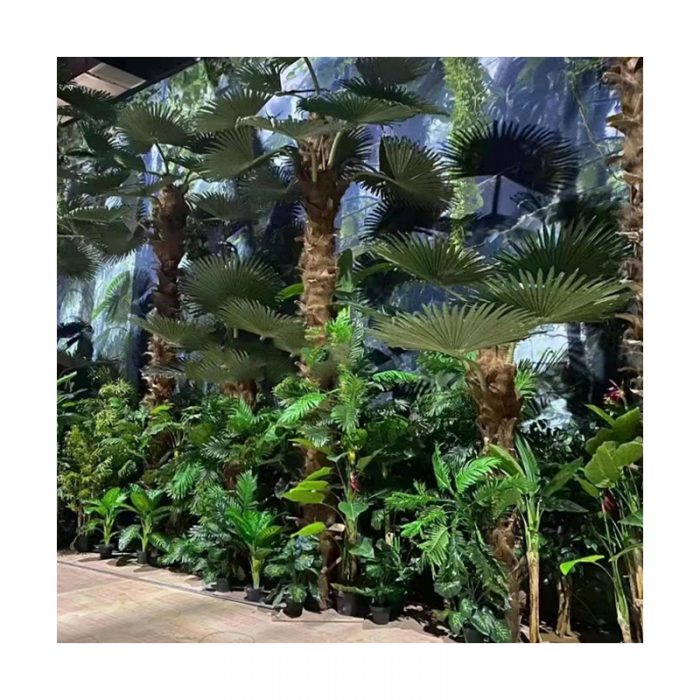
African Artificial Plants Market is on a steady growth trajectory. This trend is primarily driven by rapid urbanization across the continent, an expanding middle class, and rising consumer demand for low-maintenance, durable home décor products.
The artificial plant market in Africa (as part of the Middle East and Africa region) is showing strong growth momentum. The overall market continues to grow: the entire Middle East and Africa market was valued at approximately US$210 million in 2024 and is projected to grow to nearly US$347 million by 2033, at a CAGR of approximately 5.71%. Increased global influence: the Middle East and Africa region accounts for approximately 12% of the global artificial plant market, demonstrating its growing importance as an emerging market. For example, the artificial flower market in the LAMEA (Latin America, Middle East, and Africa) region is projected to surge to 55.3 million units in 2026, representing an 8.9% increase.
Different countries across Africa exhibit unique characteristics and growth drivers.
| Country | Market Profile | Key Highlights | CAGR |
| South Africa | Regional leader | Mature and largest market. Artificial flower market reached 58.4millionin2023,projectedtogrowto82.4 million by 2030. | 5.0% – 5.5% |
| Nigeria | Fastest growing | Africa’s most populous country. Import market grew 48.07% in 2023-2024, showing huge demand. | ~5.63% |
| Egypt | Key North African market | Sizeable and steadily growing. Market valued at ~$20.57 million in 2024. | ~5.7% – 5.71% |
| Ghana | West African potential | Rapidly rising market. Artificial flower market growth expected to climb from 6.97% in 2025 to 13.83% by 2029. | Up to 13.83% by 2029 |
Reasons for growth in the African artificial plants market:
Lifestyle changes & urbanization: As urbanization accelerates and disposable incomes rise, demand for aesthetically pleasing interior décor grows. Artificial plants require no maintenance and stay green year-round, making them ideal for homes, offices, and commercial spaces.
Concentrated import dependency: Local production capacity is limited; supply is heavily import-dependent. China, with its cost-effectiveness and wide variety, has become the main supplier for most African countries, holding core market share.
Value for money & practicality: Compared to live plants that require time, money, and effort to maintain, artificial plants offer one-time purchase, long-term use, and easy cleaning – perfectly suited to modern fast-paced lifestyles.
Major events & infrastructure拉动: Large infrastructure projects, such as Ethiopia’s stadium renovations and construction for the 2029 Africa Cup of Nations bid, directly drive significant demand for artificial turf.
Overall, growth is no longer driven by a single factor but by the synergy of urbanization, consumption upgrades, and infrastructure development. For businesses and investors looking to enter or expand in the African market, this is a noteworthy window of opportunity.
Market Landscape & Trends in the African Artificial Plants Market
The “landscape” of the African artificial plants market is a multi-layered network of participants and channels. Its core characteristic is being import-driven with local production as a supplement, with China as the most important supplier.
Global suppliers (mainly China): China dominates African supply thanks to mature manufacturing and high value for money. In fast-growing Nigeria, China is the largest supplier. Many Chinese traders/manufacturers see Africa as a core market (with Africa accounting for ~9-11% of their exports) and accept OEM orders for local brands or large buyers. Online B2B platforms (e.g., leafhometrade.com) serve as key hubs connecting Chinese suppliers with African buyers – orders from markets like the DRC and Argentina have seen explosive year-on-year growth (e.g., DRC up 810%).
Local distribution networks (wholesalers, retailers, importers): These connect global suppliers to end markets. Wholesaler concentration is high in many markets. For instance, Nigeria’s import market in 2024 was highly concentrated, with a few top importers (from China, Japan, the U.S., etc.) holding most shares.
Emerging local manufacturers: Though overall scale is small, local manufacturing is rising. Nigeria’s Oriental Effect, for example, designs and manufactures high-quality artificial plants locally, tapping into local preferences for Afrocentric, eco-friendly, and minimalist designs.
Major international brands: While exact market shares in Africa are hard to pinpoint, global players like Nearly Natural and Afloral (U.S.) potentially influence the African market through partnerships with local distributors and large retailers.
End users: Main demand comes from the need for low-maintenance, durable décor, spanning homes, offices, hotels, restaurants, malls, schools, hospitals, and airports.
Channel battle: offline dominates, online rises
Sales channels show an offline-led but rapidly growing online pattern.
Offline still foundation: The primary current channel, including:
Wholesalers/distributors: Core of market circulation.
Specialty stores: Offering diverse, high-quality choices.
Florists & nurseries: Traditional channels that also sell artificial flowers as a supplement.
Independent retail stores & supermarkets: Directly facing end consumers.
Online channels growing fast: Though smaller share, online growth is strong.
B2B platforms (e.g., leafhometrade.com) are top choices for bulk purchases by local businesses (wholesalers, hotel and mall procurement).
B2C channels: With internet and mobile payment penetration, local consumers – especially younger groups – are increasingly buying via e-commerce or social media.
Regional markets: a differentiated growth mosaic
The African market is not monolithic; each region has distinct characteristics and drivers.
| Market Tier | Country/Region | Key Features & Trends |
| Mature/Leading markets | South Africa | Largest market (58.4Min2023→82.4M by 2030). Competitive, faces low-cost import challenges. High demand for realistic, high-quality products; growing focus on eco-friendly materials. |
| High-growth potential markets | Nigeria | One of the fastest-growing markets: import CAGR of 38.49% in 2020-2024, 48.07% in 2023-2024. Driven by urbanization, middle-class expansion, demand for convenient décor. Challenges: counterfeit products, economic volatility, currency depreciation. |
| Other notable markets | DRC, Niger, Liberia, etc. | High growth but smaller base. DRC projected growth 11.47% (by 2027); Niger 13.31%; Liberia import CAGR 35.36%. High import concentration with few major suppliers. |
Key trends in the artificial plants market
- Sustainability as a key compass: Global environmental awareness is influencing Africa. Demand is growing for products made from eco-friendly materials (biodegradable plastics, recycled fibers, low-VOC coatings).
- Realistic design & tech innovation as competitive focus: Advanced 3D printing, UV protection coatings, and flame-retardant technologies enable nearly lifelike and more durable artificial plants.
- Product diversification: Artificial flowers hold the largest share. But artificial grass, trees, and potted plants are also growing fast – the latter are popular in offices, commercial spaces, and homes for their realistic texture, diverse styles, and zero maintenance.
Overall, African market opportunities are vast, but success requires precise strategy.
Market Analysis for South Africa, Nigeria, Ghana, Egypt, DRC, Niger, Liberia
All seven of these countries have artificial plant markets on the rise, but each has a distinctly different rhythm. They fall into three tiers: Mature markets (South Africa & Egypt) leading in quality and trends; High-growth markets (Nigeria & Ghana) bursting with energy; and Emerging blue oceans (DRC, Niger, Liberia) with huge early-stage upside.
| Country | Tier | Key Dynamics | Notable Trends |
| 🇿🇦 South Africa | Mature flagship | Steady growth, quality-led, sophisticated demand | Artificial grass and paper-based materials fastest-growing |
| 🇪🇬 Egypt | Mature flagship | Steady growth, driven by tourism & interior design | Eco-friendly and custom designs in demand |
| 🇳🇬 Nigeria | High-growth | Surging demand, import volume grew 38.49% CAGR over 4 years | Huge, fast-growing mass market |
| 🇬🇭 Ghana | High-growth | Growth forecast to climb from 6.97% to 13.83% | High energy, huge potential, moving from early to explosive stage |
| 🇨🇩 DRC | Emerging blue ocean | High growth, strong upward momentum, 30.28% CAGR over 4 years | Market still in rapid ascent |
| 🇳🇪 Niger | Emerging blue ocean | High growth, projected 13.31%, 38.04% CAGR over 4 years | Strong demand, untapped potential |
| 🇱🇷 Liberia | Emerging blue ocean | Very high base, stable growth, 35.36% CAGR over 4 years | Transitioning from early peak to more mature stage |
Tier 1: Mature Flagship Markets (South Africa & Egypt)
As two economic engines of Africa, South Africa and Egypt have more mature artificial plant markets where consumers seek high quality, aesthetic design, and personal expression.
🇿🇦 South Africa: A mature model of excellence
- Market size: 58.4millionin2023,projectedtoreach82.4 million by 2030 at ~5% CAGR.
- Highlights: South Africans demand “realistic” and “high-quality” more than any other African region. Artificial grass is the fastest-growing segment, signaling major commercial/outdoor potential. Notably, paper-based materials are the fastest-growing sub-category, possibly leading an eco-friendly trend.
- Hot trends: Succulents, tropical flowers, and seasonal florals – popular for high-end home décor and event decorating.
🇪🇬 Egypt: An artistic stage driven by tourism
- Market size: Steady growth at ~5.71% CAGR. Competitive landscape with both local and international brands.
- Highlights: A booming interior design industry and a large tourism sector are two core growth engines, driving demand for attractive yet affordable décor.
- Hot trends: Market shifting toward eco-friendly materials, plus custom designs tailored to specific aesthetics. Eucalyptus branches, for example, are popular.
🚀 Tier 2: High-Growth Markets (Nigeria & Ghana)
These two West African countries have huge demographic and economic momentum, with explosive growth driven by straightforward demand.
🇳🇬 Nigeria: Massive volume, strong demand
- Market size: Approx. $11.15 million. Imports grew 48.07% year-on-year (2023-2024) and an astonishing 38.49% CAGR over the past four years.
- Highlights: Mass-market demand for décor. Despite price sensitivity and economic challenges, the “no-maintenance, durable” value and wide variety make them very appealing.
- Hot trends: Artificial flowers still hold largest share; seasonal plants expected to be fastest-growing category. Local manufacturer Oriental Effect targets Afrocentric, eco-friendly, minimalist local tastes.
🇬🇭 Ghana: A potential star ready to take off
- Market size: Early development stage but with explosive growth momentum. Growth forecast to climb from 6.97% to 13.83% by 2029.
- Highlights: Urbanization and a growing middle class are core drivers. Rapid shift toward high-quality, ultra-realistic, durable products; eco-friendly materials gaining popularity.
- Hot trends: Local demand heavily influenced by cultural events like weddings and funerals, as well as holidays. Consumers increasingly seek unique and customizable artificial plants for personal expression.
🌱 Tier 3: Emerging Blue Ocean Markets (DRC, Niger, Liberia)
These countries have small market bases but have shown impressive growth rates – classic high-growth, high-risk “blue ocean” markets.
🇨🇩 DRC: Impressive growth, strong momentum
- Market size: Small but projected to grow 11.47% by 2027. Imports of artificial flowers grew at a 30.28% CAGR over the past four years.
- Hot trends: Rapid ascent, though with short-term volatility suggesting shifting consumer preferences. Pink roses, hydrangeas, etc., are active in the DRC market.
🇳🇪 Niger: Strong growth, development potential
- Market size: Fast-growing, with projected growth of 13.31% by 2027 – exceeding many larger African countries.
- Highlights: Import CAGR of 38.04% over four years. As a landlocked country, its import sources include China, Nigeria, Tunisia, Turkey, and UAE – relatively diversified trade routes.
🇱🇷 Liberia: High base, steady growth
- Market size: Growth has normalized somewhat, but the 2020-2023 CAGR was a remarkable 35.36% – a very high starting point.
- Hot trends: Currently in an adjustment period following early-stage highs. Ideal for first-movers seeking early foothold. Imports highly concentrated among a few exporting countries – meaning a few suppliers dominate; new entrants need a clear differentiation strategy.
Strategic takeaways
- For established players seeking scale & profit: South Africa and Egypt are must-win markets. In South Africa, target high-quality, hyper-realistic, design-forward, eco-friendly products to capture niche segments. In Egypt, compete with international brands like IKEA by focusing on high-value commercial décor solutions and eco-friendly custom designs.
- For aggressive players pursuing scale & speed: Nigeria and Ghana are the main battlegrounds. Hit-product strategies are key – target mass markets with artificial flowers, seasonal plants, etc., and leverage social media and online channels to go viral fast.
- For first-movers seeking early-stage upside: DRC, Niger, and Liberia are ideal testing grounds. Impressive growth rates tolerate rough-and-ready operations. Move fast to capture the first wave of opportunity.
REQUEST QUOTE
Please fill out the form below and a representative will contact you. Thank you.
Sales Manager:Nina
Tel:
+86-19924394700
Email:
leafhometrade@gmail.com