
How Artificial Greenery Transform Hotels, Malls, and Restaurants?
Artificial greenery is featured throughout the hotel: a stunning plant wall adorns the lobby, lush potted palms line the corridors, and elegant orchids accent the guest rooms. The result? The hotel exudes a luxurious, verdant atmosphere without any of the maintenance hassles. The property manager told me that they save thousands of dollars annually on plant care alone.
This made me realize that artificial greenery is not merely a budget-friendly alternative but a strategic investment. For hotels, shopping malls, and restaurants, it offers a solution that creates a high-end botanical aesthetic while eliminating the challenges of maintaining live plants. It lowers costs, ensures a consistently flawless appearance, and enables design effects that are impossible to achieve with real plants.
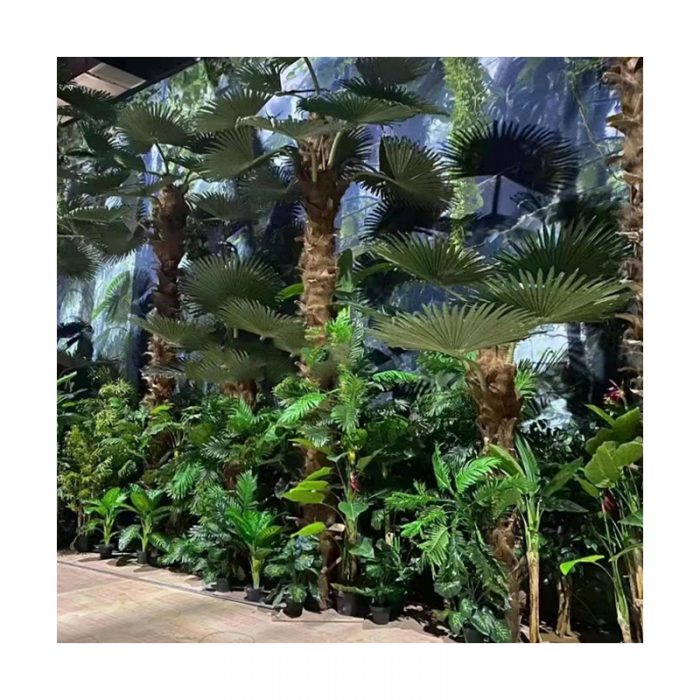
Why Commercial Spaces Need Artificial Greenery?
Biophilia is our innate human connection to nature. When we see greenery, our brains respond positively—reducing stress, improving focus, and boosting mood. This isn’t just a nice idea—it’s backed by decades of research.
In hotels, greenery makes guests feel more welcome and relaxed. They stay longer, spend more, and leave better reviews. The studies found that guests of hotels with plants and natural elements consistently express higher satisfaction and are willing to pay more.
In malls, plants encourage shoppers to linger. Studies show that shoppers who are surrounded by plants and natural elements tend to spend more time in the mall—and more money. A University of Washington study found that people will pay 11% more for products in a greener environment.
In restaurants, plants improve the dining experience. Customers linger longer over their meals, order more courses, and leave better tips. Research from the University of Gothenburg found that diners sat at tables with flowers had better dining experiences—both immediately and long-term.
The Problems with Real Plants in Commercial Spaces
Let’s be honest: live plants in commercial settings are a headache.
- They die: No matter how well you care for them, plants eventually die. In a commercial environment, they’re often forgotten or overwatered.
- They require constant care: Watering, pruning, fertilizing, pest control. It’s a never-ending cycle.
- They’re expensive to maintain: Hiring a plant maintenance service costs thousands of dollars per year.
- They’re inconsistent: Some plants thrive, others struggle. Some look lush, others look yellow.
- They’re seasonal: Plants don’t look the same all year round.
- They get damaged: Customers touch them, children pull leaves off, and accidentally knock them over.
- They have specific light requirements: Many commercial spaces have low light levels or inconsistent lighting.
The Artificial Advantage
Artificial plants solve all these problems while still delivering the visual and psychological benefits of greenery:
No maintenance: No watering, pruning, or fertilizing.
Consistent appearance: They look perfect 365 days a year.
Cost-effective: While the upfront cost is higher, the long-term savings are enormous.
Durable: They can withstand high-traffic areas.
Flexible: They can be placed anywhere, even in windowless corridors.
Allergy-friendly: No pollen, no mold, no pests.
Customizable: Available in any color, size, or species.
Hotels Welcoming Guests with Artificial Greenery
The hotel lobby is your first impression. Guests form their opinion of your property in the first few seconds. Artificial plants help make that impression memorable.
A large artificial tree in the center of the lobby creates an immediate wow factor. Guests walk in, see the greenery, and feel immediately calmer. The space feels alive. For hotel lobbies with 3–4 metre ceilings, choose plants with an overall height of 180–240 cm. They should create a statement without touching the ceiling.
What to use:
Artificial Olive Tree: Sophisticated and timeless.
Artificial Palm Tree: Common export categories, perfect for tropical vibes.
Artificial Fiddle Leaf Fig: Trending and elegant.
Artificial Monstera: Bold and modern.
Artificial green walls are stunning visual statement pieces that can showcase a hotel’s brand identity and commitment to sustainability.
What to use:
Artificial Green Wall / Moss Wall: Used for indoor decoration.
Artificial Foliage Panels: Modular panels that can be customized.
Artificial Succulents Wall: Modern and sculptural.
Behind the reception desk creates a lush and professional backdrop. This is often the most photographed part of the hotel.
Along the lobby entrance creates a “living wall” that impresses guests immediately.
Near the elevator banks creates visual interest while people wait.
Hotel corridors are often long and repetitive. Plants break up the monotony and create visual interest. For corridors, choose plants with an overall height of 120–150 cm. The width / spread should be 60–80 cm maximum to avoid blocking walkways. Using the same plant at regular intervals creates a soothing rhythm. Guests feel oriented and calmer.
What to use:
Artificial Potted Plants: Including containers.
Artificial Hanging Plants: Suitable for hanging baskets.
Artificial Stem / Branch: Can be sold separately for custom displays.
Guest rooms are where the little touches matter. A small plant on the desk or a single stem in a vase elevates the guest experience. For guest rooms, choose plants with an overall height of 90–120 cm for floor plants, or 30–60 cm for tabletop plants. When a guest walks into a room and sees a beautiful plant, they feel more valued. They perceive the hotel as more upscale. They leave better reviews.
What to use:
Single Stem Flower: Usually paired with leaves and flower heads.
Artificial Orchid: Elegant and luxurious.
Artificial Succulent: Includes cacti, aeoniums, etc. Perfect for desks.
A well-decorated hotel increases social media shares and attracts new visitors. Investing in quality artificial plants for your hotel is a proven way to improve guest satisfaction, increase revenue, and build brand loyalty.
Shopping Malls Artificial Greenery Transform decor
Shopping malls need to keep shoppers in the mall longer. The longer someone stays, the more they spend. Artificial plants are one of the most effective ways to do this.
The mall atrium is the heart of the shopping centre. It’s where people gather, relax, and orient themselves. Plants make it feel welcoming. For multi-storey atriums, choose plants with an overall height of 250–300 cm or higher. The width / spread should be 150–250 cm for maximum impact. Use multiple plants of varying heights to create a “grove” effect. This is one of the most effective ways to make a large space feel intimate and welcoming.
What to use:
Artificial Tree / Faux Tree: Including indoor and outdoor. For multi-storey atriums, choose overall height of 250–300 cm or higher.
Artificial Palm Tree: Common export categories.
Artificial Foliage Panels: Modular panels for green walls.
Seating areas in malls need plants that create a sense of enclosure without making shoppers feel trapped. For seating areas, choose plants with an overall height of 140–180 cm and a width / spread of 80–120 cm. The “green screen” effect: Place plants around the perimeter of the seating area to create a sense of boundary. This makes shoppers feel more comfortable and encourages them to linger.
What to use:
Artificial Potted Plants: Including containers.
Artificial Green Wall / Moss Wall: Used for indoor decoration.
Artificial Succulent: Includes cacti, aeoniums, etc.
Individual stores can use artificial plants to draw attention and create a welcoming entrance. For shop fronts, choose plants with an overall height of 120–150 cm and a width / spread of 60–90 cm. The “visual anchor” effect: A plant at the entrance serves as a visual anchor. When shoppers see it, they know the store has arrived. This is one of the most effective ways to increase foot traffic.
What to use:
Artificial Potted Plant: Includes containers. Choose overall height of 120–150 cm.
Artificial Hanging Plants: Suitable for hanging baskets.
Artificial Vine / Garland: Wrapped decoration.
Artificial Ivy: Climbing or trailing decoration.
Mall corridors are the arteries of the shopping centre. Plants need to be placed strategically without obstructing flow. For corridors, choose plants with a width / spread that’s narrow enough to maintain clear walking paths. If the corridor is 120 cm wide, keep the plant’s spread under 50 cm.
What to use:
Artificial Potted Plants: Including containers.
Artificial Hanging Plants: Suitable for hanging baskets.
Artificial Stem / Branch: Can be sold separately.
Food courts are the busiest areas of a shopping mall. Plants can help manage the chaos and create a more pleasant dining experience.
What to use:
Artificial Potted Plants: Including containers.
Artificial Succulent: Includes cacti, aeoniums, etc.
Artificial Hanging Plants: Suitable for hanging baskets.
Use plants to define different dining zones.
Place plants around the perimeter to create a sense of enclosure.
Add vertical greenery to soften the acoustics and make the space feel calmer.
Restaurants Creating Memorable Dining Experiences with Artificial Greenery
Restaurants are about more than food—they’re about the experience. Plants create a memorable dining experience that keeps customers coming back.
The entrance sets the tone for the dining experience. Potted plants or planters near the entrance create a welcoming “green” vibe. Place plants near the entrance to create a welcoming “green” vibe. A small Artificial Succulent or Single Stem Flower on a hostess stand adds an elegant touch.
What to use:
Artificial Potted Plants: Including containers.
Artificial Succulent: Includes cacti, aeoniums, etc.
Single Stem Flower: Usually paired with leaves and flower heads.
Centerpieces are a major part of the dining experience. They set the mood for the meal. Restaurants that choose to use flowers should opt for low-maintenance artificial options. For tabletop centerpieces, choose plants with an overall height of 20–40 cm. The Flower Head Size should be appropriate for the table—smaller for intimate tables, larger for family-style tables. Fresh flowers have a scent, which can sometimes interfere with the aroma of the food. Artificial flowers don’t have this issue—they add visual beauty without sensory conflict.
What to use:
Single Stem Flower: Usually paired with leaves and flower heads. Choose flower form such as rose-shaped, daisy-shaped.
Artificial Succulent: Includes cacti, aeoniums, etc.
Artificial Potted Plant: Including containers.
Tall floor plants in corners create visual interest and fill empty space. Place tall floor plants in corners or near windows. Use them to fill empty space and create visual interest.
What to use:
Artificial Tree / Faux Tree: Including indoor and outdoor. Choose overall height of 120–170 cm.
Artificial Palm Tree: Common export categories. Choose overall height of 140–180 cm.
Artificial Fiddle Leaf Fig: Trending and elegant.
Hanging plants add a decorative element to the restaurant’s interior. Hang plants from the ceiling near a window or above the bar. They’re perfect for wrapped decoration around support pillars, beams, or walls.
What to use:
Artificial Hanging Plants: Suitable for hanging baskets. Choose plants with trailing elements.
Artificial Vine / Garland: Wrapped decoration.
Artificial Ivy: Climbing or trailing decoration.
Outdoor patios are increasingly popular, but they come with challenges. Wind, rain, and sun can damage real plants. Artificial plants can withstand the elements. For outdoor patios, choose weatherproof plants that can handle wind and rain. Use knock-down structure plants that can be easily stored in harsh weather. For outdoor use, choose UV Resistant / UV Protected artificial plants. Essential for outdoor use, UV-protected plants won’t fade or become brittle in sunlight.
What to use:
Artificial Tree / Faux Tree: Including indoor and outdoor.
Artificial Potted Plants: Including containers.
Artificial Hanging Plants: Suitable for hanging baskets.
Artificial Vine / Garland: Wrapped decoration.
Artificial Ivy: Climbing or trailing decoration.
The line between artificial and real is blurring. Real-touch technology—using latex, PU, and soft-touch coatings—is making artificial plants almost indistinguishable from the real thing.
As businesses become more environmentally conscious, there’s a shift toward sustainable artificial plants—made from recycled materials, free from harmful chemicals, and designed for longevity. Bio-based polymers, recycled PE, and eco-friendly pigments are becoming more common.
Artificial plants integrated with technology—LED lighting, air purification, sound systems—are emerging. These plants offer benefits beyond aesthetics.
For hotels, they increase guest satisfaction and revenue.
For malls, they increase dwell time and spending.
For restaurants, they improve the dining experience and customer loyalty.
Artificial plants deliver a proven return on investment that fresh plants can’t match. They’re cost-effective, consistent, and beautiful.
Whether you’re a hotel manager, a mall operator, or a restaurant owner, artificial plants can transform your commercial space. They create a welcoming, professional environment that customers love and competitors envy.
REQUEST QUOTE
Please fill out the form below and a representative will contact you. Thank you.
Sales Manager:Nina
Tel:
+86-19924394700
Email:
leafhometrade@gmail.com