
Unveiling artificial flower process production from conception to delivery
In our artificial flower workshop, production lines churn out lifelike peonies. The flowers were stunning—soft pink petals with a subtle gradient / ombre, embossed veins that you could feel with your fingertip, and a soft-touch coating that made them feel almost alive.
One flower? About thirty seconds. But getting to that thirty seconds took ninety days. The flower represented months of design work, material sourcing, mold making, sampling, production, and quality control. The thirty seconds on the assembly line were just the final act of a much longer story. Artificial flower manufacturing isn’t just about making things—it’s about orchestrating a complex symphony of materials, machines, and human skill. From the initial sketch to the final shipping container, every step requires precision, patience, and a deep understanding of how things work.
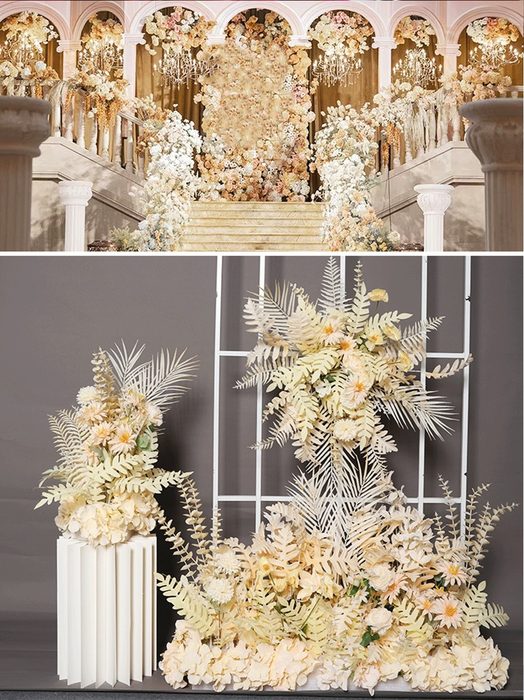
Every artificial flower starts with an idea
Sometimes it’s a designer looking at a real flower and thinking, “I want to capture that.” Sometimes it’s a buyer saying, “We need a new color for this season.” Sometimes it’s a trend—boho chic, tropical vibes, minimalist whites.
The design phase is where the flower’s appearance is conceptualized. Designers study real flowers to understand their leaf shape, flower form, number of petal layers, and color / coloration. They take measurements of flower head size (the diameter in centimeters), study the leaf tip (pointed, rounded, or blunt), and note whether the edges are smooth or have a serrated edge.
Product Design is the first stage of production. Before any material is cut or any mold is made, the design team works out:
Design development from concepts or reference flowers
Material selection (fabric type, coating, wire gauge)
Color specification and sampling
Size and proportion determination
The 3D Scan – Capturing Nature’s Details
For premium artificial flowers, the design process often starts with a 3D scan of a real flower. A laser scanner captures every surface detail—the leaf vein patterns, the natural curves of the petals, the subtle texture of the surface.
The scan creates a digital model that serves as the blueprint for everything that follows. It’s used to:
Create precision molds for injection molding
Design cutting dies for fabric petals
Plan color application and shading
Ensure botanically accurate proportions
The scan data: The data is used to create a digital model of the flower, complete with all its textures and details. When a mold is created from this scan, embossing and embossing create leaf veins that are raised and tactile.
Sampling – The First Physical Flower
Before any bulk production begins, a sample is created. This is the first physical version of the flower, and it’s incredibly important.
The sampling process typically takes about 15 days. It involves:
Prototype production and refinement
Buyer approval before bulk commitment
Sample cost often credited toward orders
The sample serves as the golden reference for all future production. Every flower in the bulk order must match the sample in color, size, shape, and finish. If the sample has a matte finish, the bulk order must have a matte finish. If the sample has a glossy finish, the bulk order must have a glossy finish.
First-article approval is when the production sample is checked against approved standards. This creates a realistic benchmark for production.
The Golden Sample
A golden sample is a formally approved physical product used as a reference for production and inspection. It’s not just one flower—it’s a complete record that includes:
The physical flower itself
An approval record signed by the buyer
A specification sheet with all measurements
Photos from multiple angles
Material references
Packaging standards
The golden sample is the single source of truth for the entire production run. If there’s ever a dispute about quality, the golden sample is the final arbiter.
Artificial flowers are made from a surprising variety of materials
Part Two: Material Preparation – Gathering the Ingredients
The Raw Materials
Artificial flowers are made from a surprising variety of materials. The choice of materials determines the flower’s look, feel, durability, and cost.
Common materials include:
Polyester Fabric / Silk: The traditional material for flowers. Silk Plant is the traditional name, but it’s actually made of polyester. It’s soft, takes dye well, and creates realistic petals.
Polyethylene (PE) : Highly realistic, often used for leaves and succulents. Durable and UV-resistant.
Polyvinyl Chloride (PVC) : Relatively stiff, often used for leaf veins or branches. Cost-effective but less realistic.
Polyurethane (PU) : Used for highly realistic leaves or petals. Creates soft, “Real Touch” surfaces.
Thermoplastic Elastomer (TPE) : Soft rubber texture, used for succulents or fruits.
Latex: Used for coatings to increase realistic feel.
Flocking Material: Nylon or viscose short fibers used for fuzzy, velvety surfaces.
Foam / EVA Foam: Soft, used for simulated flower heads.
Crepe Paper: Low-end or decorative simulated flowers.
Ribbon: Used for bouquet wrapping or decoration.
For stems and trunks:
Iron Wire / Steel Wire: Inner core, bendable.
Paper Wrapped Wire: Commonly used for single flower stems.
Plastic Coated Wire: Rust-proof, used for outdoor artificial plants.
Solid Wood Rod / Wooden Stick: Used for artificial tree trunks.
PU Foam Trunk / Artificial Bark: Surface with simulated bark texture.
Plastic Stem / PP Rod: Polypropylene, not easily bent.
Aluminum Wire: Lightweight, oxidation-resistant.
Rattan Core / Jute Rope: Used for rustic-style artificial vines.
Fabric Processing
For fabric-based flowers, the material preparation begins with fabric processing:
Fabric cutting with optimized layouts to minimize waste
Color dyeing in specified batches
Material verification for quality consistency
Lot tracking for traceability
The first step often involves putting the polyester fabric in gelatine in order to stiffen it. This stiffening makes the fabric easier to cut and shape.
Dip Dyeing / Pad Dyeing is used when fabric is dyed entirely before cutting. This ensures uniform color throughout the petal.
Structural Components
The supporting elements of the flower are prepared separately:
Wire cutting and forming
Foam core preparation
Stem covering materials
Assembly hardware
The Importance of Material Quality
Incoming material inspection is the first quality checkpoint. What’s checked:
Raw material quality (fabric, foam, wire, latex/PU coatings)
Color consistency of base materials
Material lot tracking for traceability
The heart of every artificial flower is its petals
Petal production is where the flower starts to take shape:
Cutting petals from prepared fabric
Shaping with heat and pressure molds
Edge treatment for natural appearance
Color application and shading
Punch Cutting is the process where sheets are cut using a die. This is fast and efficient, producing hundreds of petal shapes per minute.
Heat Pressing / Die Cutting is used when fabric leaves are cut into shape and textured using heat pressing. The fabric is placed between heated plates and pressed. The heat set the fabric into a permanent three‑dimensional shape, complete with curves, folds, and textures . For more advanced materials, such as PU (polyurethane), they are formed by pressing the upper and lower molds together. The surface texture of the petals is processed by a hot pressing shaping device to give it an uneven curve and increase the sense of reality.
Real Touch Coating
For premium products, the petals receive a Real Touch coating. This is where the flower goes from “nice fabric flower” to “I can’t believe this isn’t real.”
Real Touch is a term used in the artificial flower industry to describe flowers that have been treated with a soft, latex-like coating. There are two main types:
Latex Coating: Applied as a thin, flexible layer over the petal surface. This creates a soft, realistic petal texture. Latex is the softest feel, best for close-up applications.
PU (Polyurethane) Finish: More durable, suited for commercial installations. PU offers a slightly firmer texture but lasts longer.
The Real Touch process involves:
Latex or PU coating application
Curing for durability
Texture development
Additional time and handling vs. standard production
Leaf and Greenery Production
Leaves and greenery follow a similar process:
Leaf cutting and shaping
Vein detail application
Color variation treatment
Stem attachment preparation
Leaf Vein detail is critical for realism. Clearly visible textures make the difference between a cheap leaf and a premium one. Embossed Vein / Realistic Vein Texture is achieved through embossing and embossing create leaf veins.
Injection Molding for Plastic Components
For plastic flowers and components, Injection Molding is the primary manufacturing method. It’s used for plastic leaves, flower trays, pots, etc.
The process:
- Multi cavity dies are used for the production of the petals
- Granules of HDPE (or other plastics) are used
- The granules of different colours are melted
- The melted material is injected into the mould cavity through a nozzle
- After the moulds are cooled, the petal leaves are removed from the die
Injection molding produces parts with consistent dimensions and geometry across all products. It’s ideal for high-volume production.
Artificial flower Component Integration
Assembly is where the individual components come together to form a complete flower:
Petal attachment to central core
Bloom formation and shaping
Leaf placement and securing
Stem construction and covering
Skilled artisans meticulously assemble the flowers, adding layers and fine details to achieve a cohesive, lifelike appearance.
Hand Assembly vs. Machine Assembly
The assembly of artificial flowers is a blend of handwork and machine work.
Hand Assembly / Hand Tying is essential for premium flowers. Skilled workers:
Hand-paint or dye each petal and leaf to enhance depth and realism
Meticulously assemble the flowers, adding layers and fine details
Apply specialized texturing techniques that impart a natural, lifelike surface
Creating artificial flowers is a meticulous art form. Every petal, stem, leaf, and stamen must be cut, shaped, painted, and carefully assembled by hand.
Stem Construction
The stem is the backbone of the flower. It needs to be strong, flexible, and realistic.
Stem construction involves:
Wire cutting and forming for the core
Stem covering materials (paper, fabric, or plastic)
Assembly hardware for connections
Bendable Stem is a key feature of quality artificial flowers. Built-in wire allows the flower to be positioned and repositioned without breaking.
Quality Checks During Assembly
During assembly, in-line verification checks are performed:
Color consistency across units
Construction quality spot-checks
Dimensional accuracy
Attachment security testing
In-line quality checks occur continuously during production:
Color matching against master samples
Petal formation and attachment
Stem flexibility and structure
Coating consistency (for Real Touch products)
Random sampling every 2–4 hours depending on complexity.
Artificial flower The Final Polish
Surface Treatment
Finishing is where the flower gets its final, polished appearance.
Spray Painting / Airbrushing is used for gradient colors on leaves or tree trunks. This technique creates subtle color transitions that mimic the natural variation found in real flowers.
Coating adds protection and realism:
Latex coating or PU coating adds a soft, realistic feel
Matte Coating / Dull Finish eliminates reflections
Gloss Finish simulates waxing or fresh leaves
Dry Brush Highlighting is a technique where lighter colors are applied to edges or raised areas. This creates depth and visual interest.
Speckled Paint / Mildew Effect simulates real leaf spots, adding natural imperfections.
Antiquing / Weathering creates an aged, dried, or vintage effect.
Simulated Wax Layer applies wax or semi-transparent coating to the surface, mimicking the natural cuticle of real leaves.
Simulated Dew / Water Droplets are decorative transparent droplets added to mimic morning dew. Transparent adhesive dots simulate water droplets.
Heat Setting
Heat Setting is the process where polyester leaves are heated to shape and set. The heat makes the fibers hold their shape permanently.
Curled Leaf Edge Effect is achieved through thermosetting creates slight curls at the leaf edges. This mimics the natural curling of real leaves as they age or dry out.
Flocking
Flocking is electrostatic flocking used to simulate frost, dust, or moss. The process involves applying an adhesive to the surface and then electrostatically applying tiny fibers ( Flocking Material: nylon or viscose short fibers ) to create a fuzzy, natural texture.
Flocked Frost Effect uses white flocking to mimic winter frost.
Artificial flower Quality Control
Quality control in artificial flower manufacturing is a five-stage process:
- Incoming material inspection
- First-article approval
- In-line checks
- Final AQL-based inspection
- Pre-shipment packing verification
Artificial flower Production Timeline Breakdown
The typical production timeline:
Stage Duration
Design/Sampling ~15 days
Material Prep 1–2 weeks
Component Production 2–4 weeks
Assembly 2–3 weeks
Finishing & Packing 1–2 weeks
Bulk Total 60–90 days
Sea Freight 2–4 weeks
Order to Delivery 90–120 days
Note: Timelines are typical; complexity and volume affect duration.
Factors That Affect Timeline
Design complexity: More complex designs take longer
New tooling: New molds require additional time
Real Touch coating: Adds specialized steps and time
Order volume: Larger orders may take longer
Seasonal demand: Peak seasons can extend timelines
Lead Times for Different Products
Standard items: Most factories maintain production cycles of 15–25 days for standard items.
Complex designs: May require additional prototyping time.
Bulk orders: Many suppliers can expedite processing within 7–10 days.
REQUEST QUOTE
Please fill out the form below and a representative will contact you. Thank you.
Sales Manager:Nina
Tel:
+86-19924394700
Email:
leafhometrade@gmail.com