
Why are artificial fruits and vegetables needed?
Today, I want to share everything I’ve learned about decorating with artificial fruits and vegetables. I was helping a friend style her new kitchen. She had beautiful marble countertops, warm wood cabinets, and gorgeous pendant lighting. But something was missing. The space felt a little cold, a little too perfect—like a showroom rather than a home.
I reached into my bag and pulled out a simple bowl of artificial lemons. I placed it on the kitchen island. Within seconds, the room felt warmer, more inviting, more alive. The bright yellow popped against the neutral tones. The round shapes softened the straight lines of the countertops. It was such a small addition, but it transformed the entire space.
My friend looked at the lemons and said, “Wait, those are fake? They look good enough to eat!”
That’s the magic of high-quality artificial fruits and vegetables. When done right, they don’t look like decorations—they look like nature’s bounty, frozen in time. And unlike the real thing, they never rot, bruise, or attract fruit flies.
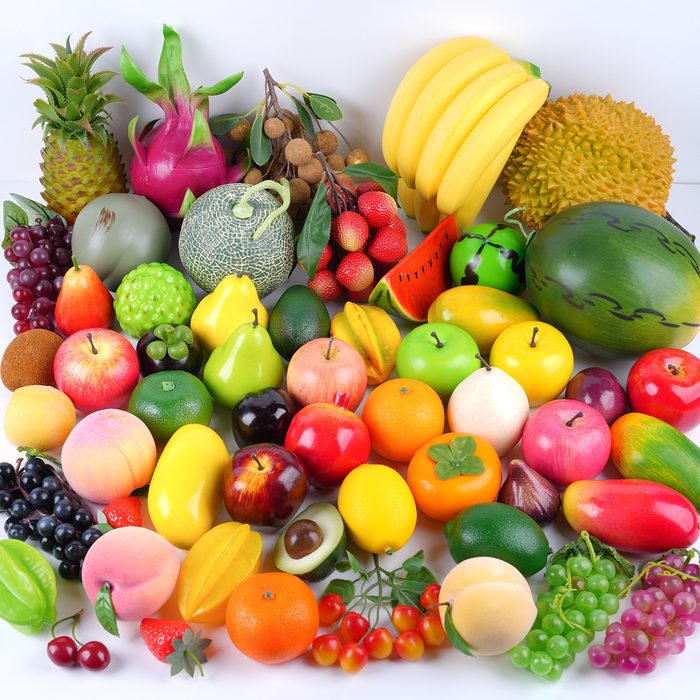
why are Artificial Fruits and Vegetables so popular now?
You’ve probably noticed something: food decor is everywhere. Designers are calling it ” farmstand chic “—a trend that brings the charm of a farmer’s market into the home. Colorful faux produce bedecks everything from cherry-shaped ceiling fixtures to strawberry side tables. So why is this trend resonating now? Part of it is nostalgia. People are craving a simpler, healthier lifestyle. Part of it is the “dopamine decor” movement—the deliberate choice of objects that make you smile, that carry emotional warmth, that prioritise joy over function. And part of it is simply practical: with grocery prices skyrocketing, a bowl of fresh produce has become a symbol of aspirational wealth. Faux fruit lets you capture that abundance without the weekly grocery bill.
Perfect for Staging: Interior designers staging homes for sale have relied on quality faux décor for years. You can’t ask a seller to replace fresh produce every few days during a three-week listing period. No Maintenance, No watering, no pruning, no worrying about fruit flies. They’re ready to display the moment you take them out of the box. Year-Round Availability, Want lemons in winter? Tomatoes in spring? With artificial produce, every season is harvest season. Allergy-Friendly, For people with pollen or plant allergies, artificial produce offers greenery without the sneezing.
Why Today’s artificial fruits and vegetables Is Different?
The quality shift happened when manufacturers moved from stylized illustrations to mold-casting from actual specimens. When a faux artichoke starts life as a cast of a real artichoke, it inherits natural scale variation, surface texture, and color irregularity. Uniform, perfectly symmetrical fake fruit is easy to identify. Slightly imperfect, appropriately weighted resin pieces are not.
Today’s premium faux produce is made from materials that mimic the weight, texture, and color of the real thing. The best pieces are so realistic that guests will do a double-take.
Not all artificial produce is created equal.
Hollow Plastic – Lightweight, shiny, immediately recognizable as artificial. Fine for props. Not for serious display.
Dense EVA Foam with Hand Painting – Mid-tier. Better texture than plastic, but paint chips at edges over time and the weight never convinces anyone handling it.
Resin Casting with Hand Finishing – Top tier. Heavy, detailed, durable, and the most likely to hold up to close inspection.
PU Foam – Lightweight, cost-effective, and resistant to rot. Ideal for long-term display.
Silicone – The gold standard for realism. Soft, flexible, and incredibly lifelike.
High-Density Polyethylene (PE) – Durable and realistic, often used for premium faux fruit.
Before you invest in artificial produce, check these three things:
- Scale Variation: In product photos, examine one visible row of scales or leaves. If every scale is the same size at the same angle, the piece was mass-pressed rather than cast from a real specimen.
- Color Gradient: Real produce has subtle color variations—darker at the base, lighter at the tips, or vice versa. Flat, single-tone color is a giveaway.
- Weight: Realistic faux produce has some heft. If it’s too light, it breaks the illusion.
artificial fruits and vegetables Styling Tips for Many scenarios
Kitchens:
The kitchen is the most natural place to incorporate artificial fruits and vegetables. It’s where food belongs, so faux produce doesn’t feel out of place—it feels like an extension of the space.
The Classic Fruit Bowl, this is the easiest and most timeless way to use artificial fruit. A bowl of apples, lemons, or oranges on a kitchen island or countertop adds instant color and warmth.
Choose a bowl that complements your kitchen style—ceramic for a classic look, wooden for rustic, glass for modern.
Mix colors and sizes for visual interest. A bowl of green apples, red apples, and yellow lemons creates a beautiful palette.
For a realistic look, choose fruit with subtle imperfections—a slight bruise, a tiny stem, a bit of natural variation.
Limit yourself to one or two food accents per room. A bowl of lemons on a counter is plenty.
A large ceramic bowl filled with bright yellow lemons and limes on a white marble countertop. The contrast is stunning.
Open shelving:
Open shelving is a great place to incorporate artificial produce. It adds color, texture, and a lived-in feel.
Group produce with other kitchen items—cookbooks, jars of pasta, olive oil bottles.
Arrange a few artichokes or eggplants on a shelf alongside plates and bowls.
Use a small tray or cutting board to display spices, oils, and a few pieces of faux fruit.
Decorative apples (green or red) can add colour and a timeless decor element.
Countertop Vignettes:
Create small, styled groupings on your countertops. These “vignettes” add personality and interest.
Place a cluster of artificial tomatoes in a vase on your kitchen counter.
Fill a clear glass jar with faux lemons or limes for a bright, sunny look.
Combine faux fruit with fresh herbs in a small pot for a mix of real and artificial.
Artificial lettuces and artichokes are a go-to for many designers looking for a modern vibe.
The “Farmstand” Table:
For a more dramatic statement, create a farmstand-inspired display on your dining or kitchen table.
Fill a large wooden bowl or basket with a mix of faux fruits and vegetables—apples, pears, artichokes, eggplants.
Add a few sprigs of faux greenery for a lush, abundant look.
Use it as a centerpiece for special occasions or leave it out all year round.
Sculptural ceramic bowls filled with faux fruit make easy, playful centerpiece fillers.
Here’s a fun trick: add a small bowl of faux lemons to your bathroom with a lemon-scented potpourri. It’s unexpected, fresh, and adds a spa-like feel.
Artificial fruits and vegetables aren’t just for homes. They’re also a powerful tool for businesses—restaurants, cafes, grocery stores, and markets.
Restaurants and Cafés
In the food service industry, presentation is everything. Artificial produce can create inviting displays that draw customers in.
Styling Tips:
Showcase a fruit display near the front of your eatery to infuse a fresh vibe into your space.
Use fake food decorations to draw attention to your lemonade stand, farmers market booth, or themed restaurant.
Pair artificial fruits with artificial greenery for styled tables or retail displays.
Simulation vegetable models are ideal for restaurant display, photography, and commercial refrigerators.
Grocery Stores and Supermarkets
Grocery stores face a constant challenge: keeping produce displays looking fresh. Real produce wilts, bruises, and needs constant replacement. Artificial produce offers a solution.
Styling Tips:
Use artificial fruits and vegetables for visual merchandising in areas where real produce is impractical.
Display them in baskets, crates, or refrigerated cases for a realistic look.
Simulated fruits and vegetables can be displayed in supermarkets, giving people a refreshing feeling.
Farmers Markets and Seasonal Events
Farmers market booths and seasonal events benefit from the abundance that artificial produce can provide.
Styling Tips:
Create bountiful displays that look like they were picked fresh.
Combine with real produce (like herbs or flowers) for a mixed display.
Use for photo backdrops or Instagram-worthy setups.
Theatrical Props and Photography
Artificial fruits and vegetables are also essential for theater props, photography, and film.
Styling Tips:
Use them for food photography where real produce would wilt under hot lights.
Create still-life compositions that last indefinitely.
Perfect for school plays, community theater, and professional productions.
Types of artificial fruits and vegetables
Lemons and Limes: The most versatile choice. Bright, cheerful, and they never go out of style. Perfect for kitchens, bathrooms, and entryways.
Apples: Classic and timeless. Green or red, both add color and a timeless decor element.
Oranges: Warm and inviting. Great for adding a pop of color to neutral spaces.
Grapes: Elegant and abundant. Perfect for draping over bowls or cascading from displays.
Artichokes: A designer favorite. The architectural complexity makes them a sophisticated choice. Look for resin-cast versions with natural scale variation.
Avocados: Trendy and modern. Perfect for contemporary kitchens.
Vegetables to Consider
Artichokes: As mentioned, a top-tier choice for sophisticated displays.
Eggplants: The deep purple color adds richness and depth.
Peppers: Red, green, and yellow peppers add vibrant color to any display.
Tomatoes: Bright and cheerful. A bunch of artificial tomato sprays in a vase brings the garden inside.
Asparagus: Elegant and sculptural. Perfect for more formal displays.
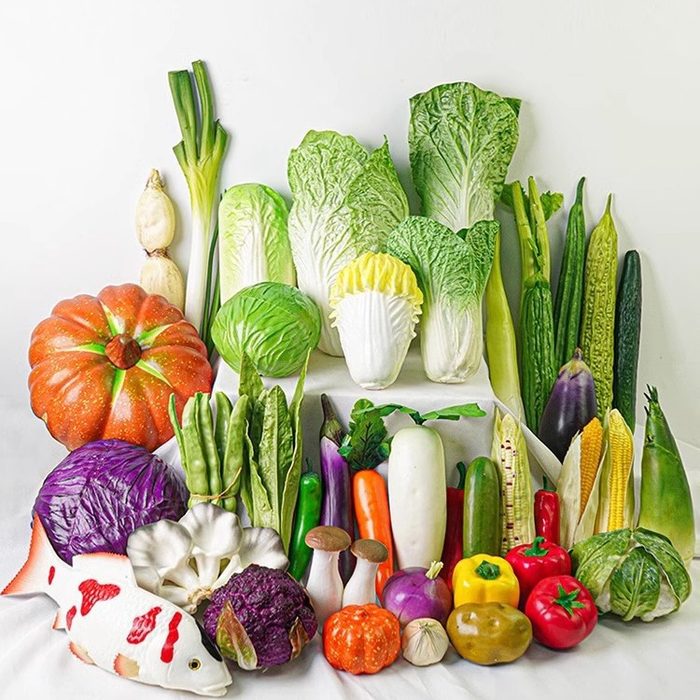
artificial fruits and vegetables Styling Tips
The Rule of Three
In floral design, we often use the “rule of three”—grouping items in odd numbers for visual interest. This works for artificial produce too. A grouping of three artichokes, three lemons, or three pears is more pleasing than two or four.
Mix Textures
Combine smooth fruits (like apples and lemons) with textured ones (like artichokes and pineapples). The contrast adds visual interest and depth.
Consider the Container
The vessel is as important as the fruit. A beautiful bowl, basket, or tray elevates the display. Choose containers that complement your space—ceramic for a classic look, wood for rustic, glass for modern.
Think About Height
Don’t just pile everything flat. Create layers and height by using stands, pedestals, or stacked books beneath your displays.
Seasonal Rotations
One of the joys of artificial produce is that you can change it with the seasons. Bright citrus in summer, warm oranges and apples in fall, pomegranates and figs in winter. It’s an easy way to refresh your decor without a major overhaul.
The “Less Is More” Rule
This cannot be overstated. Limit yourself to one or two food accents per room. A single, beautiful bowl of lemons makes more impact than a dozen scattered pieces.
Artificial fruits and vegetables have come a long way from the plastic-looking versions of the past. Today’s high-quality pieces are so realistic that they fool even the most discerning eyes. They offer all the beauty of fresh produce—the vibrant colors, the organic shapes, the sense of abundance—without any of the waste, maintenance, or spoilage.
Whether you’re styling a kitchen island, creating a farmstand display for a café, or adding a playful touch to a bathroom, artificial produce is a versatile and joyful design tool. It brings warmth, color, and a sense of nature into any space.
REQUEST QUOTE
Please fill out the form below and a representative will contact you. Thank you.
Sales Manager:Nina
Tel:
+86-19924394700
Email:
leafhometrade@gmail.com