
Artificial Flowers vs. Faux Flowers in the Modern Botanicals Industry
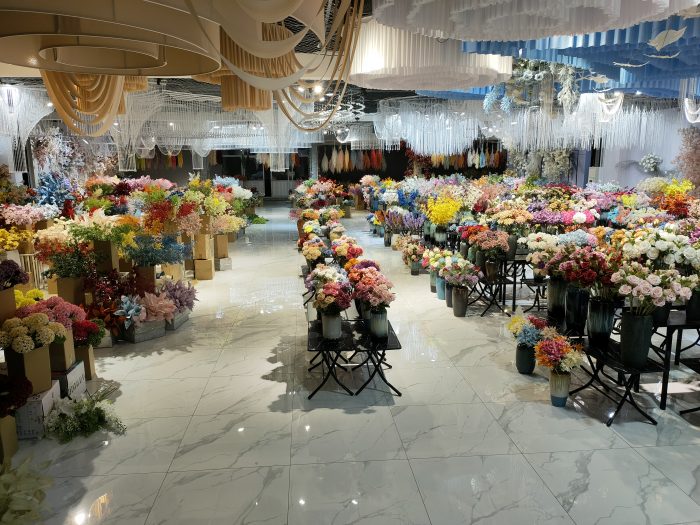
“What’s the difference between artificial flowers and faux flowers?” This is a question you’ll inevitably encounter when you walk into any interior design studio, event planning company, or plant wholesale showroom. It arises in buyer meetings, product descriptions, supplier negotiations, and even in everyday conversations between designers. And the answer, surprisingly, is not as simple as people imagine.
The short answer is that most industry professionals use these terms interchangeably. However, beneath this surface-level synonymy lies a rich tapestry of historical context, material science, manufacturing philosophy, and marketing strategy that every serious player in the artificial plant industry should understand.
What Are Artificial Flowers?
Artificial flowers represent the broadest, most technically correct category term for any non-living floral decoration manufactured to imitate real blooms. The term encompasses everything from mass-produced plastic stems to museum-quality botanical replicas. When industry professionals speak of artificial flowers, they are referring to the entire spectrum of man-made floral products—regardless of material, quality level, or manufacturing method.
The historical roots of artificial flower production stretch back over 1,500 years to ancient China, where artisans hand-crafted silk blooms for imperial courts. By the 18th century, these creations had become status symbols across Europe, adorning hats, garments, and aristocratic interiors. Today, the global artificial plants market is projected to expand from USD 773.86 million in 2025 to USD 1.02 billion by 2031—a testament to the enduring appeal of permanent botanicals.
What Are Faux Flowers?
Faux flowers derive their name from the French word for “false”. While the term technically means the same thing as artificial flowers, it carries distinct marketing and perceptual connotations. Faux suggests elegance, sophistication, and a nod to nature without pretending to be it. It is the preferred term in interior design circles, wedding planning, and high-end floral styling.
As one industry observer aptly noted: “To call a flower artificial is to honour the craft behind it, celebrating its enduring beauty without dismissing its connection to nature”. The distinction, therefore, is less about what the product is and more about how it is positioned in the marketplace.
The “Silk” Misnomer
Perhaps the most persistent confusion in the industry revolves around the term silk flowers. Historically, silk was indeed the material of choice for premium artificial blooms. However, in modern manufacturing, genuine silk is rarely used. Today, the term “silk” in the artificial plant industry refers primarily to polyester or nylon fabric materials, not natural silk fiber.
Polyethylene (PE) has emerged as the gold standard for realistic foliage. PE leaves are produced through injection molding or extrusion, then finished with coloring techniques to create natural-looking shapes, textures, and vein details. Standard PE offers firm structure and shape stability, making it ideal for topiary, hedges, and green wall panels. Real Touch PE adds a soft-touch processing that creates a smoother surface and more natural leaf feel.
Polyester fabric (often marketed as “silk”) remains the dominant material for flower heads and petals. Fabric leaves are cut, dyed or printed, and shaped with internal wires or supports. The material offers superior color customization and soft textures that mimic natural petals.
Polyurethane (PU) and latex coatings are applied to enhance realism, creating soft touch surfaces that feel almost alive. Foam and EVA foam provide lightweight structure for flower heads, while PVC offers durability for stems and structural components.
Artificial flowers vs. faux flowers when we examine manufacturing processes
Injection molding is the primary method for producing plastic leaves, flower trays, and pots. Multi-cavity dies are used for the production of petals, with granules of different colors melted and injected into the mold cavity. This process enables mass production with consistent quality.
Heat pressing and die cutting transform fabric into shaped, textured leaves. Workers place leaves into heated molds and press them into shape, with embossing typically requiring temperatures of 150-200°C. This process creates the embossed vein details that distinguish premium products from cheap imitations.
The finishing processes are where artificial flowers truly earn their lifelike reputation:
Spray painting and airbrushing create the gradient and ombre effects that mimic nature’s color variations. High-end versions use matte finishes and sometimes velvety textures that feel soft to the touch. A matte, slightly powdery finish is almost always more realistic than a high-gloss, plastic-looking surface.
Flocking—the electrostatic application of short fibers—simulates frost, dust, or moss effects. The process makes surfaces more realistic and increases the artistic quality of the product. Flocked stems and leaves imitate the texture of real plants with remarkable accuracy.
Dry brush highlighting applies light colors to leaf edges or trunks, while gel bead dew drops use transparent adhesive dots to simulate water droplets. These techniques—combined with UV coating for outdoor durability—represent the pinnacle of artificial flower craftsmanship.
Artificial flowers vs. faux flowers Designer’s Perspective
In interior design circles, the preference for “faux” over “artificial” reflects more than semantics. The term faux suggests intention and artistry—a deliberate design choice rather than a cheap substitute. This distinction matters in high-end commercial projects where aesthetics and client perception are paramount.
Designers evaluating products look for botanically accurate features: correct leaf shape, visible leaf veins, appropriate serrated edges or smooth margins, and accurate leaf tips. They examine flower form, petal layers, and bloom count to assess authenticity.
For hotels, corporate headquarters, airports, and restaurants, the choice between artificial and faux is largely irrelevant—what matters is compliance and durability. Flame retardant certification is mandatory. UV resistant materials are essential for any exposure to sunlight.
Green walls and moss walls represent a growing category where both terms are used interchangeably. These installations require dense leaf coverage and stable structures, often achieved through PE injection molding.
Retail consumers encounter both terms across e-commerce platforms and brick-and-mortar stores. Artificial flowers remains the most widely used and technically correct term. Faux flowers appeals to style-conscious shoppers seeking elegant home décor. Silk flowers—despite rarely containing actual silk—continues to convey a sense of quality.
one conclusion becomes clear: there is no meaningful technical difference between artificial flowers and faux flowers. The terms describe the same category of products—man-made floral decorations designed to imitate nature.
REQUEST QUOTE
Please fill out the form below and a representative will contact you. Thank you.
Sales Manager:Nina
Tel:
+86-19924394700
Email:
leafhometrade@gmail.com