
2026 Middle East Artificial Plants Market Analysis: The Fastest-Growing Region for Faux Greenery
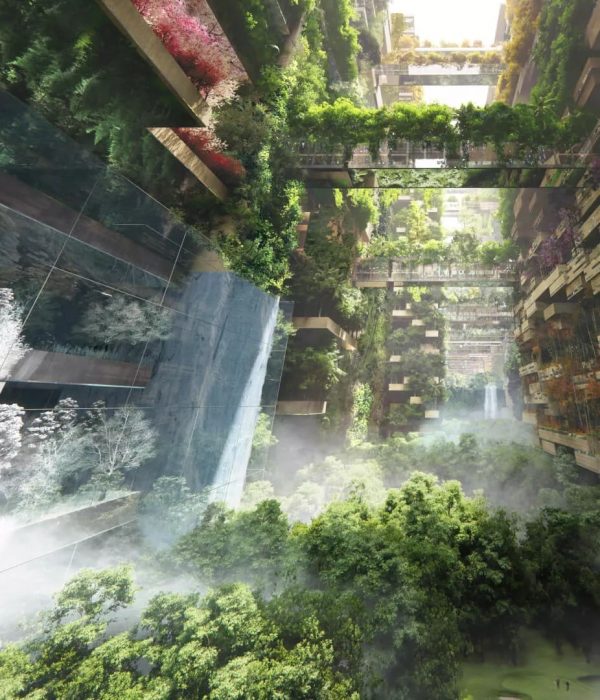
The Middle East artificial plants and faux flowers market is undergoing a pivotal transformation – from a niche decorative item to a mainstream consumer essential. Driven by rapid urbanization, booming tourism, evolving lifestyles, and extreme arid climates that make natural greenery maintenance costly, artificial plants are now used year-round across commercial spaces, residential interiors and exteriors, hotels, shopping malls, office buildings, and large public areas. With scarce water resources, the region increasingly favors low-maintenance, durable decorative solutions – making faux greenery a practical and aesthetic alternative.
According to IndexBox, the Middle East artificial flowers, leaves, and fruits market will see robust growth from 2026 to 2035, outpacing global averages. The region currently accounts for approximately 8% of the global artificial plants and flowers market.
Key Growth Drivers:
- Accelerated urbanization and tourism infrastructure development
- National transformation plans (e.g., Saudi Vision 2030)
- Biophilic design becoming a standard interior design trend
- Rapid penetration of cross-border e-commerce platforms
Buying intent for artificial plants in the Middle East has risen sharply. Saudi Arabia saw year-over-year order growth of over 40%, while the UAE has ranked among the top five destinations for artificial plant orders globally.
1. Country-by-Country Market Analysis
1.1 United Arab Emirates (UAE): Largest & Fastest-Growing Core Market
The UAE is the undisputed leader in the MENA artificial plants market, boasting high per capita spending and strong demand from commercial and residential décor sectors. It has become a prime destination for high-end artificial plant suppliers worldwide.
Market Size & Growth (UAE artificial flowers market size)
Grand View Research data shows the UAE artificial flowers market revenue at US31.8millionin2023,projectedtoreachUS50 million by 2030, with a CAGR of 6.7% (2024–2030). Deep Market Insights predicts the UAE will dominate the regional artificial plants market by 2033.
Demand Drivers
- Rising preference for integrating greenery into indoor/outdoor designs with low maintenance
- Limited urban green spaces
- Advanced manufacturing delivering hyper-realistic products
Commercial Highlights
The Dubai Hills Mall installed 112 custom artificial trees (2.5m to 7.5m tall), including olive, ficus, and frangipani trees. These high-end products use flame-retardant and UV-resistant materials, lasting 5–10 years – showcasing the shift from basic décor to premium design elements.
Product Types & Materials (faux greenery materials)
- Whole plants, cut flowers, branches, turf
- Polyester holds largest revenue share (2023); paper-based is fastest-growing
- Mass market: standard plastic; premium: silk, polyester, polymer composites + custom design
Challenge
Cultural preference for real plants remains; but improving quality is gradually overcoming this.
1.2 Saudi Arabia (KSA): The Fastest-Growing Emerging Market
Saudi Arabia is the fastest-growing country for artificial plants, fueled by Vision 2030 mega-projects like NEOM, the Red Sea tourism project, and Riyadh urban complexes.
Market Size & Growth (Saudi artificial plants market growth)
Deep Market Insights: 2024 market size US41.99million,expected US70.42 million by 2033, CAGR 5.91%. 6Wresearch forecasts KSA artificial flower market growth rising from 5.35% (2025) to 9.69% (2029). Saudi holds 2.4% of global market share.
Drivers
- Changing consumer lifestyles – demand for low-maintenance, long-lasting décor
- Landscaping market (US3.45billionin2024)toreachUS5.55 billion by 2030 (CAGR 8.10%), creating synergy
Segment Breakdown
- Artificial flowers: largest share in 2024
- Artificial grass: fastest-growing, most profitable segment
Key Players
Moshref Trading Company, Al Mashriq Flower Center (since 1980s), Nafees Florist, Special Flowers Center, Madinatul Arab Flowers House, Afrah Decoration Supplies.
1.3 Kuwait: Mature Market in Stabilization
Kuwait’s artificial plant market is transitioning from rapid growth to maturity.
- Import trend 2020–2024: -1.89% CAGR – reflecting market adjustment, not demand collapse
- UAE exports ~US$365,000 worth of artificial plants to Kuwait annually
- Main import sources: UAE and China
1.4 Qatar: Post-World Cup Long-Tail Effect
The 2022 World Cup triggered massive infrastructure and commercial space investment, creating sustained demand.
- Qatar artificial flowers market CAGR ~4.5% (2025–2031)
- Local market for faux plants growing ~15% annually, driven by hotels, malls, gardens
- UAE is key supplier: US$963,000 worth (114,000 kg) exported in 2023
Qatar actively promotes sustainable green cities, and artificial plants are welcomed as water-saving alternatives.
1.5 Oman: Sustained Growth Momentum
Smaller but dynamic market.
- Artificial flowers growth rate: from 5.89% (2025) peaking at 16.27% (2028)
- Artificial grass growth: from 5.74% (2025) to 15.35% (2028)
- Trade hub: exports US55,800(mostlytoUAE);importsfromUAE(US403,000), China (US$77,400), Turkey, India
1.6 Bahrain: Stable Niche Market
- 2024 import growth approx. -1.39%; 2027 forecast ~4.68% growth
- Total imports ~US$1 million; China largest supplier (~141,293 kg)
- Re-exports to Qatar (US$40,100), Saudi, Egypt
- Active players: JK FLOWERS & PLANTS, Hejair Garden & Landscaping
1.7 Turkey: Manufacturing & Transit Hub Bridging Europe & Middle East
Turkey plays dual roles: significant consumer market and production/transit hub.
- Strong local manufacturing (plastic, silk products)
- 2023 exports to Oman: US$23,900
- Forecast CAGR ~5.2% (2024–2033)
- Hosts international home & building exhibitions (e.g., SAUDI BME EXPO)
1.8 Egypt: North African Growth Pole
Egypt sits at the crossroads of Middle East and Africa. Booming interior design industry drives the market.
- Market projected from ~US22.9million(2024)toUS33.91 million (2033), CAGR 5.71%
- Widely used in residential, office, public spaces
- Local manufacturers increasingly participate in regional supply chains
1.9 Israel: High-Tech Driven Décor Market
High-tech orientation, high acceptance of premium realistic products, strong e-commerce penetration.
- Forecast growth rate ~6.71% by 2027
- High per capita spending on home quality
- Dozens of local producers, distributors, importers – niche but professional
1.10 Jordan: Small but Active Trading Market
Small size, mainly trade transit benefiting from proximity to Saudi and Iraq.
- Artificial trees sold mainly to wholesale clients
- Most products imported, led by China, then UAE
2. Competitive Landscape & Product Segmentation
Fragmented competition with three camps:
International brands: Nearly Natural (USA), Silkflower Import (Sweden), TreeLocate (UK) – via local distributors.
Regional traders/distributors: UAE’s Shajara (JCS Artificial Flowers and Plants Trading LLC), Real Touch, Foliages.
Local specialists: Saudi’s Moshref, Al Mashriq; UAE’s Afnan Garden Plants, Green Paradise Flowers.
By product type:
- Whole plants & trees (palms, olives, ficus)
- Cut flowers
- Branches & twigs
- Turf/grass
- Others (small pots, green walls)
By material (faux plant materials):
- Polyester – largest revenue share, soft texture, realistic colors
- Plastic/PE – economical, outdoor use, UV-resistant
- Silk – high-end, closest to real flowers
- Paper – fastest-growing, eco-friendly, aligns with green consumer awareness
Commercial (largest demand source):
- Hotel lobbies & ballrooms
- Offices & co-working spaces
- Schools, hospitals, theme parks, airports, shopping malls, cruise ships
Residential:
Increasing use in villas and apartments, especially among expatriates.
3. Distribution Channels
3.1 Wholesale/Distributors
The main channel. UAE acts as re-export hub to Saudi, Qatar, Oman, Bahrain, Kuwait. China remains global supply base. Platforms like Leaf Home Trade connect Chinese manufacturers with Middle East B2B buyers.
3.2 Retail
- Specialty/home stores: e.g., Zahr in Saudi (Riyadh)
- Big-box retailers: IKEA offers FEJKA artificial potted plants (~1.5 OMR/piece)
3.3 Online Retail & Cross-Border E-commerce (artificial plants online Middle East)
Rapidly expanding. noon.com offers mass to premium products. Saudi orders up 40% YoY. Online penetration rising steadily across UAE, Saudi, and other mature markets.
4. Segmentation
Pyramid structure:
- Mass market: Standard plastic/PE, bulk imports from China – small palm trees, green wall panels.
- Mid-range: Silk/polyester composites – balance of aesthetics and value – homes and small commercial.
- High-end: Custom, oversized, fire-retardant/UV-resistant products, like Dubai Mall’s custom trees (7–10 years lifespan) – includes design, safety, installation services.
5. Key Middle East Artificial Plants Market Trends (2026–2035)
Trend 1: Artificial Grass Becomes High-Growth Segment
In Saudi and across the region, artificial grass is the most promising category – fastest-growing, most profitable. Driven by sustainable landscaping and water conservation.
Trend 2: Biophilic Design Drives Interior Greenery Demand
Biophilic design is now standard in Middle East interior design (2026). Green walls, plant installations, natural textures integrate into commercial and residential spaces. Major exhibitions (INDEX Dubai, HFS Sharjah) focus on biophilic and wellness trends.
Trend 3: Cross-Border E-commerce Accelerates Export Growth
Middle East is one of the fastest-growing emerging markets for Chinese artificial plant exports. UAE and Saudi order volumes rank high; Saudi YoY growth >40%. Chinese B2B manufacturers leverage digital trade platforms.
Trend 4: Eco-Friendly Materials & Sustainability
Paper-based artificial plants are the fastest-growing material segment. As Saudi and UAE introduce green building regulations, demand rises for biodegradable and recycled material faux plants.
Trend 5: Mega-Projects Spur High-End Customization
NEOM, Red Sea tourism, post-World Cup Qatar, Expo legacy sites – all drive demand for custom artificial trees, large-scale green walls, and integrated landscape design services. Market shifting from standard products to tailored, full-service solutions.
The Middle East artificial plants market is on a steady growth trajectory, 2026–2035, expected to outpace global averages. UAE and Saudi Arabia form the two poles – UAE as the largest, highest per-capita market; Saudi as the fastest-growing with greatest incremental potential. Qatar, Oman, and other GCC states benefit from infrastructure and tourism long-tail effects. Turkey, Egypt, and Israel each offer unique roles as manufacturing node, North African growth pole, and high-tech consumer market.
Opportunities: artificial grass, biophilic-driven commercial projects, cross-border e-commerce, high-end custom products.
For companies entering the Middle East market, leveraging the UAE’s regional hub status and Saudi’s giga-project driven growth, while adopting differentiated price and product strategies, will be key to success.
6. Strategic Market Layout: Dual-Engine Driven & Six Core Trends
The Middle East artificial plants market is transitioning from niche to mainstream, with a clear “UAE + Saudi dual-engine” pattern and six reshaping trends.
Dual-Engine & Multi-Tier Markets
| Dimension | UAE – Scale & Speed Champion | Saudi Arabia – Fastest-Growing Incremental Market |
|---|---|---|
| Growth logic | Steady growth, CAGR 6.7% | High-speed expansion, CAGR up to 9.69% |
| Core drivers | Mature high-end commercial, retail, tourism real estate; strong in customization & branding | Mega-project peak, Vision 2030; volume expansion & rapid low-cost penetration |
| Typical scenarios | Malls, luxury hotels, high-end offices | NEOM, Riyadh urban renewal, large commercial complexes |
| Product preference | Design & quality; mid-to-high end realistic & special materials | High value-for-money, bulk procurement; artificial grass is key |
| Role | Regional trendsetter & procurement core; entry gateway | Growth engine & volume procurement hub |
Second-tier potential markets (GCC affluent):
- Qatar: Post-World Cup tail effects – stable demand for artificial trees and premium landscaping.
- Oman: Strong momentum – artificial flowers growth peaking at 16.27% (2028); artificial grass >15%.
- Kuwait & Bahrain: Smaller but high spending; mature, slight adjustments – rely on specialized, customized products.
Third-tier growth markets:
- Turkey: Consumption + manufacturing/transit hub.
- Egypt: North African pole, interior design boom (CAGR 5.71%).
- Israel: High-tech consumer market, high acceptance of realistic products.
7. Six Core Trends Reshaping the Market
1. Category Upgrade – From Flowers to Grass
Artificial grass adapts to water scarcity (Saudi plans to raise recycled water usage from 17% to 40%). It offers 5–7 years near-zero maintenance – a cost-effective green solution for outdoor environments.
2. Technical Innovation – Hyper-Realistic & Eco Materials
Shift from traditional materials to polyester, PE/PET, and paper-based (fastest-growing). Paper aligns with green consumer awareness.
3. Channel Transformation – Cross-Border B2B E-commerce
Online B2B is changing export dynamics. Middle East order volumes surge; Saudi orders +40% YoY. Platforms offer data insights to adjust product strategies.
4. Application Scenarios – Design-Driven, from Decorative to Essential
Artificial plants enable biophilic design as core elements – not just decoration. Dubai Mall’s resort-style custom trees (2.5–7.5m) integrated into scene storytelling.
5. Environmental Compliance – Policy Pushing “True Green”
Saudi plans to develop 66 million m² of green space; UAE aims for 50% EV/hybrid by 2030. Carbon policies drive adoption of eco-friendly production.
6. Competition – From Fragmented to Specialized
Efficient supply chain and custom design services gain pricing power. Short-chain model: China factory → B2B platform → Middle East buyer.
8. Country Deep Dive: Hotspots & Product Focus (SEO Keywords Integrated)

🇦🇪 UAE: Middle East’s Trendsetter
Market heat: ★★★★★ (flagship)
Key trends: Eco-friendly paper materials fastest-growing; high-end commercial loves custom greenery solutions.
Growth: ~7% CAGR, US$50 million by 2030.
Hot products:
- Artificial grass – water-saving
- Hyper-realistic large plants – biophilic design
- Flame-retardant/waterproof outdoor series – safety & weather resistance
Price preference: Mass market volume; high-end profits.
🇸🇦 Saudi Arabia: Fastest-Growing Blue Ocean
Market heat: ★★★★★ (growth engine)
Key trends: Segment divergence – artificial flowers stable; artificial grass fastest-growing, most profitable (CAGR 7.39%).
Growth: US41.99M(2024)→US70.42M (2033).
Hot products:
- Artificial grass – mega-project standard
- Artificial trees & large greenery – landscape landmarks
- Small home pots & decorative flowers – residential beautification
🇶🇦 Qatar: Post-World Cup Steady Market
Market heat: ★★★★☆ (high-end potential)
Key trends: High-end commercial main engine – luxury hotels, malls, gardens using large artificial trees.
Growth: ~4.5% CAGR; faux plant market ~15% annual growth.
Hot products:
- Large artificial trees – visual focal points
- Custom landscape plants – themed décor
- Faux green walls – premium commercial atmosphere
🇴🇲 Oman: Strong Momentum Potential
Market heat: ★★★☆☆ (artificial flowers surging)
Key trends: Hyper-realism sought – flowers & grass looking/feeling natural. Eco-materials gaining attention.
Growth: Artificial flowers growth peaking 16.27% (2028).
Hot products:
- Hyper-realistic artificial bouquets – durable & maintenance-free
- Faux turf – for yards & public spaces
- Custom floral arrangements – personalized décor
🇰🇼 Kuwait & 🇧🇭 Bahrain: Stable Mature Niches
Kuwait: Small, high spending; import CAGR -1.89% (2020–24) – market adjustment.
Bahrain: Import growth -1.39% (2024); role as transit hub for basic, volume products.
🇹🇷 Turkey: Manufacturing & Transit Hub
Hot products: Plastic & silk flowers, holiday decorations – cost & location advantage to Middle East & Europe.
🇪🇬 Egypt: North Africa’s New Growth Pole
Market heat: ★★★☆☆ (emerging)
Key trends: Interior design boom drives demand; tourism uses faux flowers to enhance hotel experience.
Growth: 5.71% CAGR (2025–2033).
Hot products:
- Customizable flowers – personalized décor
- Recyclable/eco-friendly plants – rising green awareness
- Hotel décor flowers/plants – lower maintenance, better aesthetics
🇮🇱 Israel: High-Tech Driven Premium Market
Hot products: Hyper-realistic, high-quality faux plants. Artificial grass growing at >9% CAGR. Major import sources: China, Switzerland, Netherlands.
9. Strategic Takeaways for Businesses
- Market selection: Saudi and UAE are core – Saudi for growth volume, UAE for quality benchmark. Egypt and Turkey as gateways to Africa and Europe.
- Category strategy: Artificial grass is a blue ocean – prioritize it. Offer flame-retardant, waterproof, UV-resistant features to win commercial orders.
- Design upgrade: Move beyond simple imitation to hyper-realistic, design-driven total solutions. Adopt eco-friendly materials to lead in markets like UAE.
- Channel innovation: B2B cross-border e-commerce (e.g., Leaf Home Trade) is a shortcut. Customization services are becoming key differentiators.
Sales Manager:Nina
Tel:
+86-19924394700
Email:
leafhometrade@gmail.com