
What are realistic artificial plants?
What Are Artificial Plants? The Ultimate Multi-Dimensional Analysis Covering Types, Materials, Benefits, and Future Trends
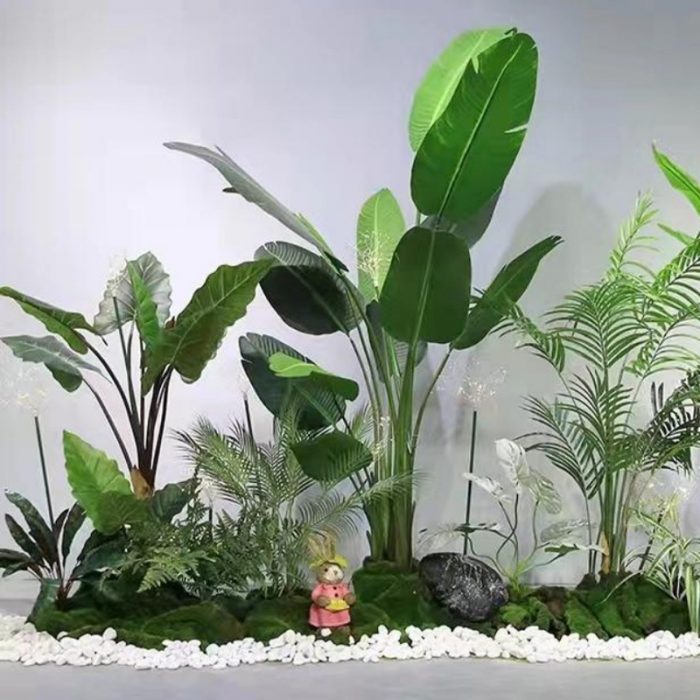
What exactly are artificial plants? And why are millions of homeowners, interior designers, hotel operators, and landscape architects choosing artificial plants over live ones?
The global artificial plant market is projected to grow from $773.86 million in 2025 to $1.02408 billion by 2031, at a CAGR of 4.78%. Some even more optimistic forecasts: Verified Market Reports estimates the market could reach $2.5 billion by 2033, growing at an impressive 9.2% CAGR. Why are artificial plants taking over modern décor? Driven by urban lifestyles, low-maintenance preferences, and manufacturing innovations. Today’s faux greenery looks almost indistinguishable from real plants, feels soft to the touch, and stays beautiful for years without a single drop of water or ray of sunlight. Whether you’re a homeowner seeking hassle-free greenery, a designer creating biophilic spaces, a hotelier managing commercial landscapes, or a procurement professional sourcing décor for retail – artificial plants offer a practical, beautiful, and increasingly sustainable solution.
1.What Are Artificial Plants?
Artificial plants (also called botanical replicas, permanent botanicals,imitation plants, synthetic plants, outdoor silk plants, faux plants, replica plants,fake plants,false plants
, or plastic plants) are durable decorative items that mimic the appearance of live plants.
Artificial plants are made from a combination of synthetic plastics, fabrics, metals, and natural materials such as wood or dried moss, requiring no watering, pruning, fertilizing, or other routine maintenance.
- Permanent botanicals: High-end artificial plants used for commercial design décor (e.g., hotels, airports, shopping malls).
- Biophilic design: A design approach that integrates natural elements into the built environment. Artificial plants are increasingly used in biophilic projects where live plants are impractical due to lighting or maintenance constraints.
- UV protection: A chemical coating applied to outdoor artificial plants to prevent fading and material degradation caused by ultraviolet radiation.
2.A Brief History of Artificial Greenery: From Ancient Egypt to Modern Realism
The desire to preserve nature’s beauty indoors is nothing new. The history of artificial plants spans thousands of years, evolving alongside human craftsmanship and industrial technology.
Ancient Origins (Ancient Egypt – Roman Empire):
Early artificial plants were made from precious materials for the elite. Egyptians used linen and papyrus to create floral arrangements for tombs and religious ceremonies. Romans advanced the craft using wax and metal wire to produce lifelike flowers for festivals and banquets.
The Silk Road Era (Medieval – 17th Century):
Silk flowers emerged along trade routes connecting China and Europe. Italian and French craftsmen perfected silk flower techniques in the 14th and 15th centuries, producing highly realistic flower replicas for churches and noble residences.
Industrial Revolution (19th Century):
Mass production became possible. German and French manufacturers began producing artificial flowers using stamped metal and dyed fabrics. The invention of celluloid in the 1860s introduced the first plastic components.
Mid-20th Century Plastic Boom (1950s–1980s):
PVC (polyvinyl chloride) and polyester revolutionized the artificial plant industry. Artificial plants became affordable for middle-class households. However, quality varied widely – many faux flowers looked obviously fake, earning the derogatory label “plastic plants.”
Modern Era (2000s – Present):
Today’s artificial plants bear little resemblance to their plastic predecessors. Advanced injection molding, hand-painting techniques, and materials like PE (polyethylene) have enabled botanically precise replicas. A high-end artificial orchid may require over 100 individual mold parts and 20 hand-painting steps to achieve lifelike realism.
3.Main Types of Artificial Plants: Flowers, Trees, Succulents, Grasses, and More
Artificial plants come in an astonishing variety to meet every possible décor need. Understanding the different types helps you select the right pieces for your specific application.
Artificial Flowers:
The largest product segment within the global artificial plant market by type.
Artificial flowers include:
- Single stems: Individual flower stems for arranging (roses, orchids, dahlias, peonies, daisies, lotuses, hydrangeas, tulips, sunflowers, lilies, etc.)
- Bouquets: Pre-packaged, ready-to-display floral arrangements
- Wreaths and garlands: Circular or linear decorations for doors, mantels, and tables
- Hanging flowers: Wall-hanging flowers for ceiling or wall décor
Artificial flowers are most commonly used for seasonal décor (spring, summer, fall, winter) and event arrangements (weddings, corporate galas, commercial events, Christmas, Halloween, Valentine’s Day, etc.).
Whole Plants and Tree Branches:
The largest sub-segment, accounting for approximately 40% of the global market. Includes:
- Potted plants: Floor plants (monstera, olive tree, ficus, boxwood, cherry blossom, bay laurel, lemon tree, cedar, pine, hydrangea tree, coconut tree, willow, palm, eucalyptus, banyan, bonsai, fiddle-leaf fig, maple, bamboo, cypress, tulip tree, ginkgo, small artificial plants without pots, etc.); tabletop plants (succulents, snake plant, pussy willow, anthurium, black locust branch, corsican mint, foxtail fern branch, hazel branch, maple leaf branch, berry branch, ferns, monstera leaf, ginkgo leaf branch, reeds, etc.)
- Trees: Palm trees, olive trees, ficus, birch, Christmas trees, Halloween trees, cherry blossom trees, landscape trees, coconut trees – heights ranging from 2 feet to over 20 feet
- Topiaries: Pruned plants in ball, cone, spiral, or animal shapes (landscape plants)
- Hanging plants: Trailing varieties such as ivy, pothos, string of pearls
Grasses:
Grasses account for 20% of the market and are the fastest-growing sub-segment, driven by landscape applications:
- Ornamental grasses (pampas grass, fountain grass)
- Ferns (Boston fern, maidenhair fern)
- Ground covers (moss mats, artificial turf)
- Bamboo canes and branches
Wood and Branches:
Account for approximately 15% of the market:
- Artificial branches and twigs for flower arranging
- Preserved natural branches (real wood treated to extend lifespan)
- Driftwood-style decorative pieces
Succulents and Cacti:
Artificial succulents have evolved from simple shelf fillers to core elements of interior design. Popular varieties include:
- Echeveria
- Aloe vera
- Barrel cactus
- String of pearls (trailing plant)
4.Materials Used in Artificial Plants: PE, PVC, Polyester, Silk, and Foam
The material composition of an artificial plant directly determines its appearance, feel, durability, cost, and suitable applications.
Plastics:
Polyethylene (PE) is the gold standard for high-quality artificial plants. Widely used for leaves and stems due to its lightweight and realistic texture. PE offers a soft, flexible structure that mimics the suppleness of natural foliage. PE leaves feel soft and natural to the touch, with high color matching and accurate texture reproduction.
- Used for: High-end indoor plants, outdoor plants with UV coating.
Polyvinyl Chloride (PVC) is known for its strength and durability and is commonly used in lower-cost artificial plants. However, its texture may be less realistic compared to other materials. PVC is relatively rigid, making it suitable for branches and stems.
- Used for: Budget-friendly artificial plants, outdoor artificial plants (with UV treatment), Christmas trees.
Polypropylene (PP) is a rigid plastic typically used for structural components, such as stem bases or support parts, to ensure stability and shape retention.
- Used for: Plant bases, structural frames, planters.
Fabrics:
Polyester is one of the most commonly used fabrics in faux plants. It is highly versatile, holds dye well, and allows for detailed coloring and lifelike patterns on leaves and petals. Polyester is a cost-effective alternative to silk, durable, and easy to shape. High-quality polyester flowers often feature UV protection to keep them vibrant even in sunny locations.
- Used for: Mass-produced flowers, indoor décor, budget-friendly artificial plants.
Silk: Known for its realistic texture and aesthetic appeal, silk is used in high-end faux flowers. It creates a lifelike texture and luster that closely resembles natural leaves and blooms. However, pure silk is more prone to tearing and wear, and is significantly more expensive. Today, most “silk” flowers are actually made from polyester fabrics designed to mimic the look and feel of real silk.
- Used for: Luxury home décor, wedding arrangements, high-end commercial décor.
Foam:
Foam materials are commonly used for certain types of plants, such as succulents, cacti, or fruits, to replicate soft textures and intricate details. Foam is easy to shape and color, making it ideal for creating unique botanical elements. Foam flowers offer a balance between silk and plastic – they are often brightly colored and lightweight.
- Used for: Succulents, artificial fruit, complex flowers, temporary decorative flowers.
Natural Materials:
Some artificial plants incorporate natural components to enhance realism:
- Wood and bamboo: Real wood or bamboo is often used for trunks and stems, especially in larger artificial plants. These natural elements add an organic feel to the design.
- Dried moss: This material is sometimes added to the bottom or around the planter to create a more realistic, finished look.
5.How Are Artificial Plants Made?
The manufacturing process for artificial plants varies by design and material, but is based on careful planning and skilled craftsmanship.
Production process for high-quality plastic artificial plants:
Step 1: Design & Modeling
Botanists and designers study live plant specimens. Detailed 3D models are created, capturing every vein, petal fold, and color transition.
Step 2: Mold Making
For plastic components (PE, PVC), precision metal molds are machined. A complex plant like an orchid may require molds for 50 to 200 different individual parts.
Step 3: Material Preparation
PE or PVC pellets are heated to a molten state. Fabric materials (polyester, silk) are cut and pre-treated with dyes.
Step 4: Molding & Shaping
Molten plastic is injected into molds (injection molding) or shaped using heat and pressure (blow molding). Leaves and petals are given their final shape.
Step 5: Hand-Painting & Assembly
This step is critical for achieving realism. Skilled artisans hand-paint each leaf, adding natural color gradients, spots, and veins. Components are then assembled – stems attached to leaves, flowers attached to stems, and all parts secured into planters or bases.
Step 6: Quality Control & Finishing
Each plant is inspected for defects. UV coatings or anti-static treatments may be applied. The final product is packaged for shipping.
🔗 Related Resources
- Artificial Plant Material Selection Guide – Compare PE, PVC, and Polyester
- OEM Customization Process – From Sketch to Finished Product
- Contact Leaf Home Trade for Custom Artificial Plants
Table of Contents
Sales Manager:Nina
Tel:
+86-19924394700
Email:
Leafhometrade@gmail.com